
Inquiry For All
Search C3 Teachers Inquiries
Search Tool
The Heart of Social Studies
Inquiries
Filed Under:
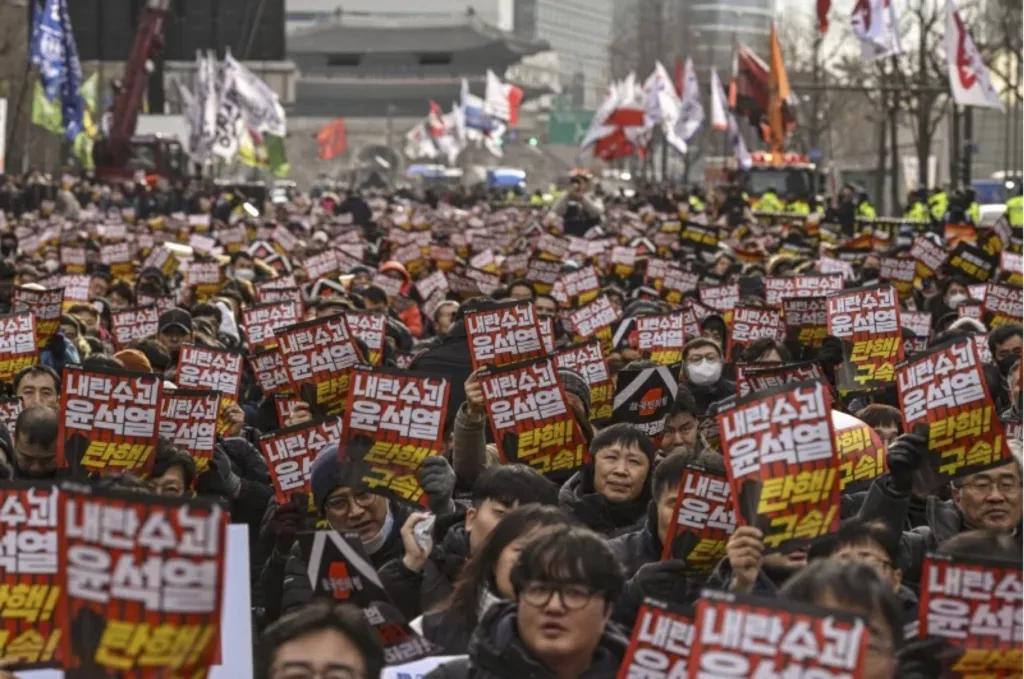
This inquiry leads students through an exploration of the idea of how people react when democracy is challenged. Students will learn about the concept of martial law. Then, they will apply what they learned to the events surrounding the martial law declaration in South Korea in December 2024. Students will analyze sources capturing the reactions…
Filed Under:
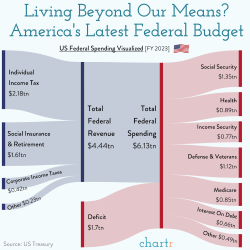
Economics is grounded in the concept of scarcity, which ultimately means there is not enough stuff (e.g., food, movie theaters, healthcare) to go around. As a result, economic reasoning emphasizes making informed decisions about how to distribute goods and services efficiently and in ways that yield the best outcomes. It seems like a straightforward process,…

Filed Under:
This inquiry leads students through an investigation into the relationship between the United States and the Republic of Korea. By investigating the compelling question about the what Korea means to the United States, students will have to consider the ways in which government documents and oral histories provide a unique way to understand this strategic…

Filed Under:
The compelling question for this inquiry calls on students to consider whether conglomerates are good for the economy. Specifically, this focused inquiry is a case study of South Korean conglomerations, known as chaebols. After the Korean War, large sums of money were given to a handful of corporations (Samsung, Lotte, Hyundai, Daewoo, etc.) in order…

Filed Under:
This inquiry leads students through an investigation of individual and group sacrifices made during times of conflict and war. By investigating the compelling question, “What does it mean to sacrifice?,” students evaluate the historical significance of individuals and groups during the Korean War. The formative performance tasks build on knowledge and skills through the course…

This inquiry explores some of the dynamic changes occurring in the US labor markets through the investigation of the compelling question “Does it matter what I want to be when I grow up?” The importance of understanding labor markets in this inquiry is twofold: (1) students should be able to understand some of the changes…
Filed Under:
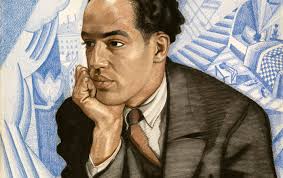
While “I Hear America Singing” is celebrated, some critics argue that Whitman’s poem overlooks the struggles and injustices faced by marginalized groups in America, such as enslaved people, women, and indigenous communities. These omissions have prompted responses like Hughes’s “I, Too”, which seek to fill the gaps in Whitman’s vision Langston Hughes’ poem “I, Too”…

This inquiry is an exploration into governments around the world; it examines how the fundamental principles of governments vary in different world communities with diverse political systems. In uncovering the idea that the role of citizens varies in governments around the world, students develop an argument supported by evidence that answers the compelling question “Does…

Filed Under:
This inquiry was developed by Wesley Wei, a student at Boyle County High School. The inquiry leads students through an investigation of the LGBTQ+ movement, primarily driven by the history of the movement through various accounts and perspectives. The compelling question—What makes a movement successful?—does not address whether or not the movement was successful, but…

Filed Under:
This inquiry leads students through an investigation of the LGBTQ+ movement, primarily driven by the history of the movement through various accounts and perspectives. The compelling question—What makes a movement successful?—does not address whether or not the movement was successful, but instead assesses the components of a movement and whether the movement is in a…

Filed Under:
This inquiry focuses on the relationship between President Abraham Lincoln and his commanding General George McClellan and the impact of their relationship on the Civil War. President Lincoln and General McClellan knew each other long before the Civil War having worked together on the Illinois Central Railroad in the late 1850s, where McClellan was the…

Filed Under:
This inquiry focuses on understanding how the Kingdom of Mali became a center of wealth in West Africa. The questions, tasks, and sources in this inquiry asks students to analyze a variety of primary and secondary sources to determine the most important factor for generating wealth in Mali: geography, trade, or religion. The first supporting…

Filed Under:
On the surface, the compelling question for this inquiry, “What’s the real story behind the purchase of Manhattan?” asks students to explore the background to the story of the sale of Manhattan to the Dutch in 1626 for $24 of beads and trinkets. A closer look at the story reveals a range of myths and…

This inquiry leads students through an investigation of the compelling question, “How do maps talk to us?” Students create symbols, use directional words and a compass rose, develop map keys, and discover relationships among items on a map as they learn to use the language of maps. They are able to distinguish between physical and…

This inquiry leads students through an investigation of maps and spatial representation, exploring how and why we depict the physical world the way we do on maps. The compelling question “Can my life fit on a map?” encourages students to consider our ability to represent real-world places on a map. In doing so, students explore…

This kindergarten inquiry leads students through an investigation of maps and globes as tools that represent the physical world in different ways. In the inquiry, students consider how each tool represents locations, what purposes each tool serves, and what advantages and disadvantages each tool offers. The study of maps and globes provides the foundation for…

Filed Under:
This inquiry leads students through an investigation of maps, the common characteristics of maps, and the stories maps can tell about a place. By investigating the compelling question, “What is the most important information a map can tell us?,” students evaluate a set of maps with a focus on the Korean Peninsula as a case…
Filed Under:
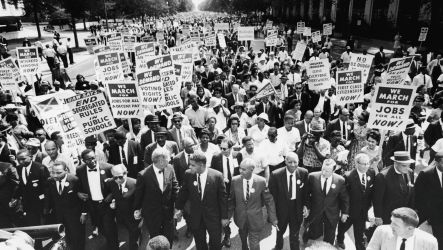
On August 28, 1963, more than 200,000 people attended the March on Washington for Jobs and Freedom. Participants gathered peacefully in Washington, D.C., to call for an end to racial discrimination and greater economic justice. Today, the event is best remembered for Dr. Martin Luther King Jr.’s famous “I Have a Dream” speech and for…
Filed Under:
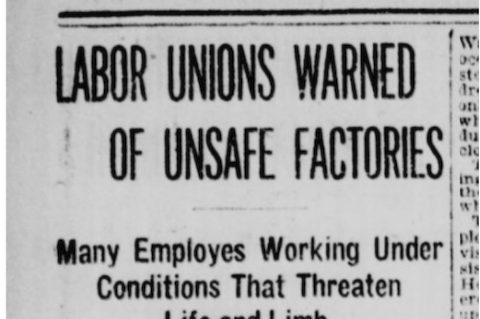
Rapid industrialization in the early 20th century dramatically changed the nature of work in the United States. In 1911, the Triangle Shirtwaist Factory fire revealed just how unsafe working conditions were. 146 garment workers, most of whom were young immigrant women, died when a fire broke out in a factory with locked exit doors and…
Filed Under:
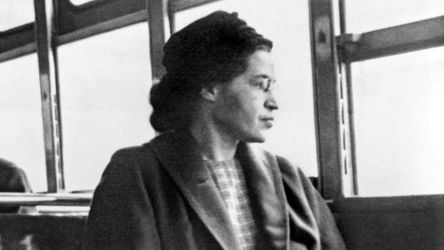
The lesson challenges the concept of a “Master Narrative” using Rosa Parks as a case study. Students will explore common misconceptions about Rosa Parks and reflect on how her story has traditionally been taught. They will dive deeper into her decades-long activism, moving beyond the idea of her being solely defined by a single day…
Filed Under:
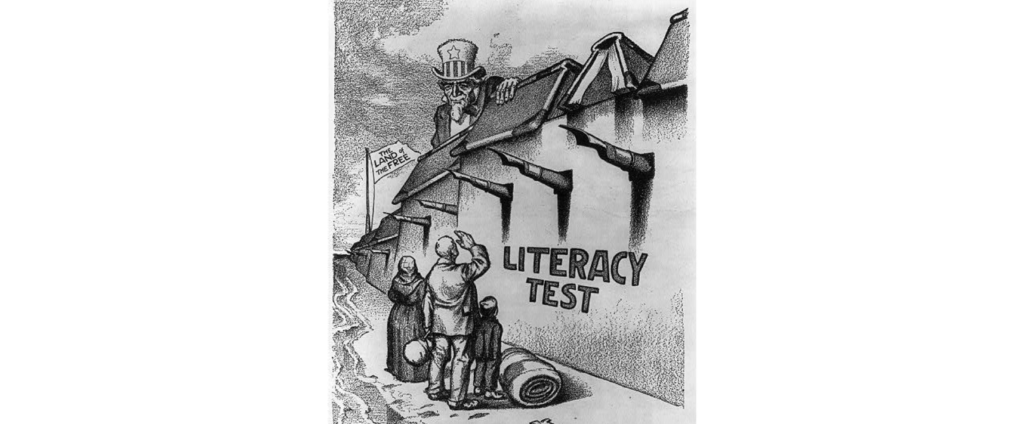
The media influences our opinions about public policy by deciding which issues receive the most attention and how topics are covered. Political cartoons in the early 1900s helped shape public opinion about many topics, including immigration. The changing demographics of immigrants during the period were accompanied by a rise in nativism—or anti-immigration sentiment.
…
Filed Under:
This inquiry leads students through an investigation of the uses and misuses of media such as leaflets and radio broadcasts during the Korean War, and the uses and misuses of media in contemporary society, politics, and war. By investigating the compelling question of how media can be used to influence others, students attempt to explore…