
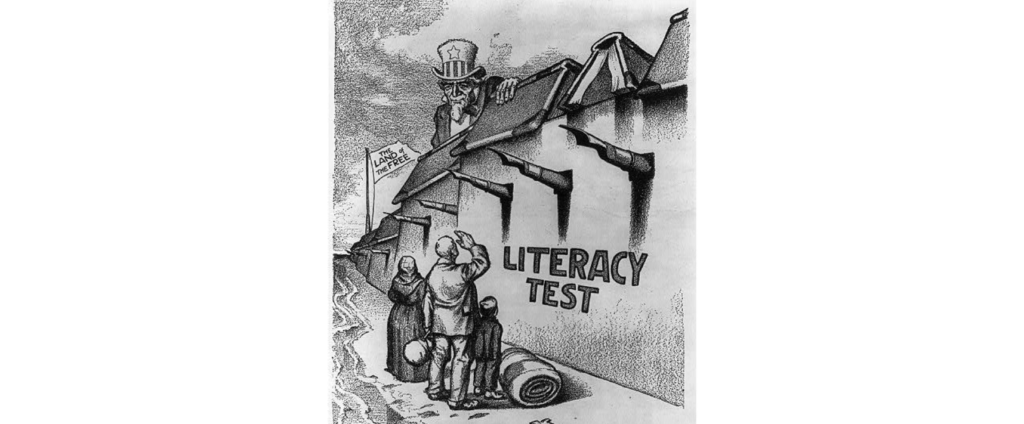
The media influences our opinions about public policy by deciding which issues receive the most attention and how topics are covered. Political cartoons in the early 1900s helped shape public opinion about many topics, including immigration. The changing demographics of immigrants during the period were accompanied by a rise in nativism—or anti-immigration sentiment.
Login to add Inquiry to Stack
About the inquiry
Compelling Question
How does the media help define who we are?
Standards
D2.His.4.9-12. Analyze complex and interacting factors that influenced the perspectives of people during different historical eras.
Instructional Snapshot
Class begins with the teacher briefly providing any necessary context for the era in which the political cartoon was created. In small groups, students closely analyze the featured source, annotating the symbolism used by the cartoonist on the scaffolded graphic organizer (or use the version without scaffolding). If needed, review the meaning behind each symbol as a class.
Next, the teacher gives each group a stack of perspective cards. Students select one of the cards and collaborate to predict how that person might have responded to the political cartoon when it was published. Students then repeat this process for each perspective card. As they consider each point of view, students arrange the perspective cards to build a spectrum reflecting how the cartoon may have been received (a spectrum is provided at the bottom of the graphic organizer).
Note: The teacher may choose to adjust the perspectives on the cards to reflect previous themes of study.
Summative Performance Task
No data found.
Taking Informed Action
No data found.