
Inquiry For All
Search C3 Teachers Inquiries
Search Tool
The Heart of Social Studies
Inquiries
Filed Under:
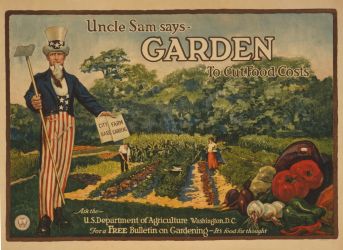
Propaganda played an important role during World War I, especially for the United States, which joined the war late and needed to quickly build public support. Many Americans had been hesitant about entering the conflict, so posters were used to encourage people to enlist, donate money and food, and boost morale at home. These posters…
Filed Under:
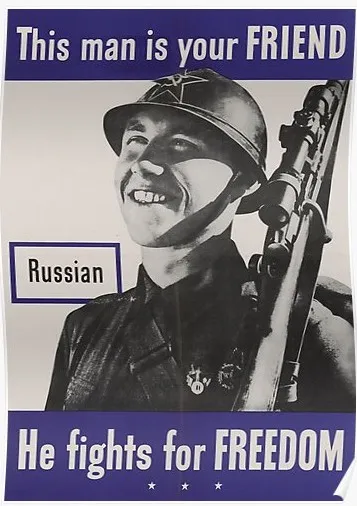
During World War II, the Soviet Union was portrayed as a key ally in the fight against fascism through posters, films, and newspaper headlines. But by the late 1940s, that alliance had shifted, and the Soviet Union was seen as an enemy. While the U.S. and Soviet Union never fought directly, they spent decades locked…
Filed Under:
During World War II, the Soviet Union was portrayed as a key ally in the fight against fascism through posters, films, and newspaper headlines. But by the late 1940s, that alliance had shifted, and the Soviet Union was seen as an enemy. While the U.S. and Soviet Union never fought directly, they spent decades locked…
Filed Under:
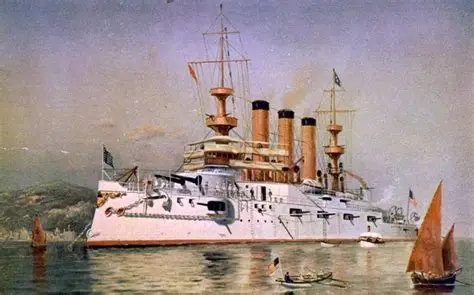
The media has always had the power to shape public opinion and influence policy, especially during times of conflict. But can the media actually start a war? The Spanish-American War (1898) gives students the chance to dig into this question by examining newspaper articles, political cartoons, and songs from the time leading up to the…
Filed Under:
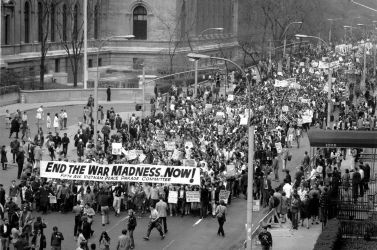
The media plays a powerful role in shaping how wars unfold. In the lead-up to conflict, sensational headlines, propaganda, and strategic messaging can fuel tensions and rally public support. During war, governments and military leaders often use the media to control the narrative, justify their actions, and maintain backing from the public—sometimes blurring the line…

Filed Under:
This inquiry leads students through an investigation of the Mexican Revolution. By investigating the compelling question, students examine justice; by completing this inquiry, students begin to understand that revolutions may not bring justice to all.
…
Filed Under:
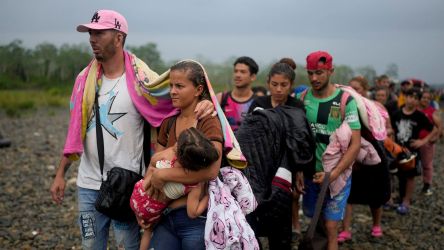
Throughout history, people have moved from one place to another in search of safety, opportunity, and a better quality of life. Today, millions of people around the world migrate across regions and national borders. In this inquiry students will investigate the compelling question, “Why do people migrate?”
…
Filed Under:
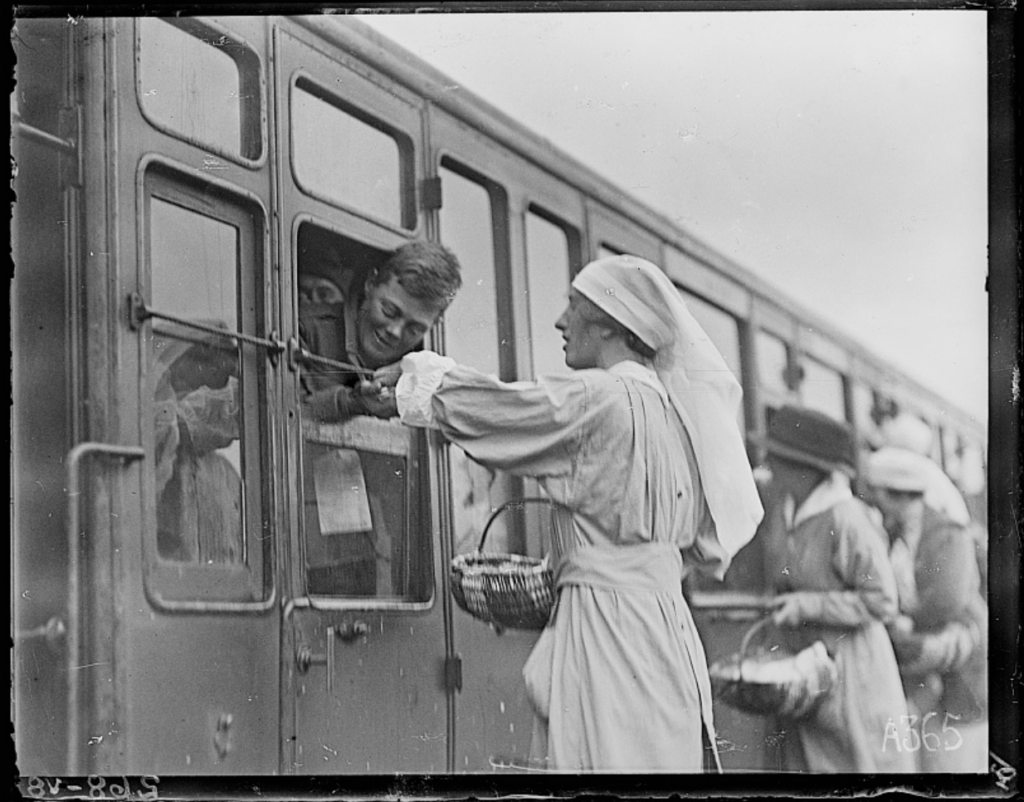
Industrialization in the early 20th century changed warfare in fundamental ways. Technological innovations during World War I, made possible by industrialization, made war more destructive than ever before. At the same time, medical and scientific advancements helped save lives. In this building block inquiry, students explore both the destructive and constructive costs of industrialization on…

Filed Under:
Since World War II, women’s enrollment in the military has been slowly rising yet women are still a disproportionate minority in the military, particularly in leadership positions. This inquiry asks students to engage with the compelling question: Why can’t women move up the ranks?
…
Filed Under:
This inquiry leads students through an investigation of the argument over whether or not raising the minimum wage will really help workers during recent trends in the U.S. In addressing the compelling question students will evaluate the impact of a minimum wage increase through the secondary source analysis of historical trends related to wage fluctuations…

This inquiry leads students through an investigation of modernization and development in three African countries: Kenya, Botswana, and Algeria. By investigating the compelling question “Does development mean progress?” students focus on the characteristics of development in these countries and respond to the challenges that each country faces in light of modernization. The inquiry is designed…

Filed Under:
This inquiry leads students through an investigation of the Hot Corner business district in Athens, Georgia. In the early 1900s, the Hot Corner was one of the most prosperous Black business districts in the South in spite of legalized segregation and Jim Crow laws (Hot Corner). At the core of the district was the Morton…

Filed Under:
This inquiry leads students through an examination of whether there is a time limit on pursuing justice in decades-old civil rights-era lynching cases. By investigating the compelling question “Is it ever too late for justice?” students evaluate primary sources about the murder of Emmett Till and address the issue of whether the passage of time…

Filed Under:
This inquiry leads students through an investigation of the impact of music on the progression of cultural change. By investigating the compelling question “Can Music Cause Cultural Change??” students evaluate the effect of music on social issues. The formative performance tasks build on knowledge and skills through the course of the inquiry and help students…
Filed Under:
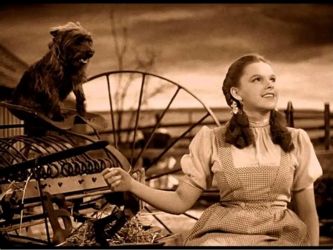
In this lesson, students will analyze two songs—“Brother, Can You Spare a Dime?” by Bing Crosby and “Over the Rainbow” by Judy Garland—to explore how each portrays the American Dream. They will compare and contrast the songs’ lyrics with their own understanding of the American Dream, examining themes of hope, struggle, and disillusionment. By the…
Filed Under:
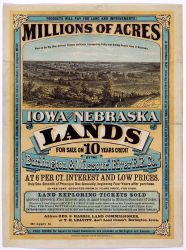
Before the advent of recorded music, entertainment took place primarily around the family piano. “Sheet music” showed people who could read musical notations how to play and sing along. Sheet music entertained the masses and became a vehicle for social and political commentary, and cultural reflection and exchange. Sheet music of the mid to late…
Filed Under:
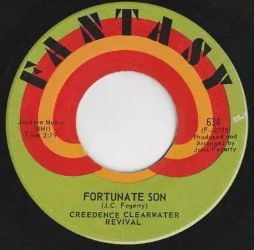
Music has long served as a powerful vehicle for protest, bypassing political noise to unite people and express collective frustration. During the Vietnam War, this artistic rebellion peaked as musicians used their platforms to directly challenge government policies. Creedence Clearwater Revival’s 1969 anthem “Fortunate Son” emerged as a defining example of anti-war dissent by targeting…
Filed Under:
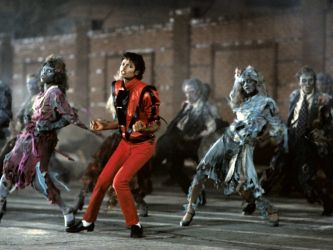
The 1980s brought a fresh wave of creativity and change to the music scene. After the protest songs of the 60s and 70s that challenged the Vietnam War, the 80s arrived with a bold and sometimes unexpected counterculture that left a lasting mark. New musical genres exploded in popularity, and the launch of Music Television…
Filed Under:
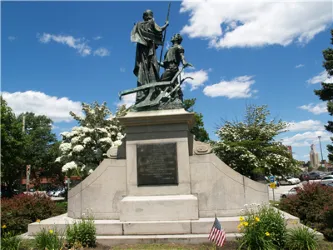
This guided inquiry lesson teaches how art and music have historically been used to share important messages and inspire communities. Using primary sources, such as War Song Medley and Lyrics and the Liberty Arming the Patriot sculpture from the Library of Congress, students explore how these forms of expression evoke feelings and tell stories. Students…

Filed Under:
Economics is grounded in the concept of scarcity, which ultimately means there is not enough stuff (e.g., food, movie theaters, healthcare) to go around. As a result, economic reasoning emphasizes making informed decisions about how to distribute goods and services efficiently and in ways that yield the best outcomes. It seems like a straightforward process,…

Filed Under:
Yellowstone became the first U.S. national park in 1872. As more Americans recognized the importance of protecting natural places from overuse and development, conservation became a national priority. With the creation of the U.S. National Park Service in 1916, the national park network grew through the 1900s, and today it maintains 63 parks around the…
Filed Under:
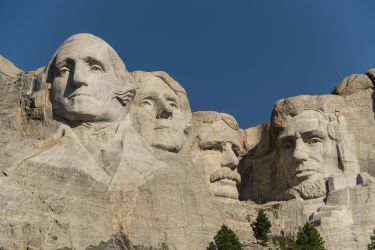
Everywhere we go we are surrounded by artifacts that memorialize aspects of United States history and values. In this inquiry, students will use photographs from the Library of Congress to learn about these national symbols, landmarks, and influential Americans and sort them into meaningful categories. Through this process students will recognize and explain the significance…