
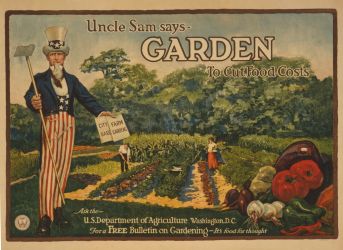
Propaganda played an important role during World War I, especially for the United States, which joined the war late and needed to quickly build public support. Many Americans had been hesitant about entering the conflict, so posters were used to encourage people to enlist, donate money and food, and boost morale at home. These posters relied on bold images and short, direct messages to grab attention and inspire action. This inquiry asks students to consider: Can the media win a war? By looking at World War I propaganda, students will examine how media influenced public opinion and whether it helped shape the outcome of the war.
Login to add Inquiry to Stack
About the inquiry
Compelling Question
Can the media win a war?
Standards
D2.His.11.9-12. Critique the usefulness of historical sources for a specific historical inquiry based on their maker, date, place of origin, intended audience, and purpose.
D2.His.16.9-12. Integrate evidence from multiple relevant historical sources and interpretations into a reasoned argument about the past.
Instructional Snapshot
Begin class by watching a few examples of modern propaganda, like commercials. Afterward, the teacher will ask, “How effective is propaganda?” and “Can propaganda be enough to win a war?” The class will discuss how we see propaganda in our everyday lives and debate how effective it really is, including whether it’s based on facts or if it relies mostly on emotions. From there, the focus will shift to 1917 and the challenges America faced during World War I, both on the front lines and at home. To address these challenges and build support for the war, the U.S. used propaganda to rally the public and boost morale. Students will break into groups, with pairs in each group analyzing two World War I propaganda documents using the Library of Congress Primary Source Analysis Tool to guide their observations. After working through their assigned documents, each pair will share their analysis with the rest of their group, focusing on the motivation behind the propaganda and the emotional appeals it used. As pairs present, the rest of the group will take notes and add annotations. The class will then come together for a Socratic discussion around the question, “How did propaganda help America win World War I?” To wrap up, students will return to their groups to discuss how each poster stirred feelings like patriotism, duty, or adventure to build public support for the war effort at home. Finally, students will select the poster they think best used propaganda techniques to built support around the war.
Formative Tasks
DELIBERATE: Identify the elements in propaganda that grab attention and persuade people to take action. Reflect on the overall purpose of propaganda it is effective in shaping public perception.
COLLABORATE: Work in pairs to determine the purpose of each World War I propaganda poster and how it may have built support for World War I, including the emotions it sought to inspire—such as patriotism, fear, or duty—to rally public backing for the war effort on the homefront. Take part in a Socratic Seminar to discuss findings and answer the question, “How did propaganda help America win World War I?”
PRODUCE: Identify a poster that most effectively used propaganda to shore support for the war.
Sources
World War I Source Set, Library of Congress
Summative Performance Task
No data found.
Taking Informed Action
No data found.