
Inquiry For All
Search C3 Teachers Inquiries
Search Tool
The Heart of Social Studies
Inquiries

Filed Under:
This inquiry leads students through an investigation of geopolitical relationships, particularly through an imperialistic lens. Focusing on the Philippines, students investigate the compelling question—how should we remember Emilio Aguinaldo?—in order to examine questions of foreign intervention, self-determination, and national sovereignty. By investigating the compelling question, students will examine the United States’ relationship with the Philippines…

Filed Under:
This inquiry leads students through the roles of three women during the abolitionists and suffrage movements. Through examining the lives of Harriett Tubman, Sojourner Truth, and Elizabeth Cady Stanton students will understand the struggle for equality through all races and genders. Students will share their points of view on equality, and answer the compelling question…

Filed Under:
This 4th and 5th grade inquiry expands students’ understandings of Indian removal in the early 1800s by centering Cherokee resistance to removal policies. The compelling question—“How did the Cherokee resist removal?”—engages students in an examination of the Cherokee, whose ancestral homelands include parts of present day Tennessee, and the efforts they took to resist removal…

Filed Under:
This inquiry leads students through an investigation of questions around Indigenous People’s land rights. Focusing on the construction of the Dakota Access Pipeline (DAPL), students explore how disputes over treaties and historical land bases complicate the already contentious issue of resource extraction. Students are progressively introduced to land rights issues centering on the experiences of…

Filed Under:
This inquiry leads students through an investigation of the nature of indigenous society. The inquiry focuses on indigenous society in Utah and opens with a question about Prehistoric Utah. From there, students examine indigenous artifacts to learn more about society. Lastly, consider how societies impact and utilize their environment. To understand indigenous society in Utah,…

Filed Under:
This inquiry leads students through an investigation of the Industrial Revolution from its technological innovations and economic strategies to its reliance on immigrant labor and its effects on individuals and societies. In addressing the compelling question “For whom was progress worth its costs?” students will work through four supporting questions with accompanying formative performance tasks….

Filed Under:
This inquiry leads students through an investigation of the Industrial Revolution in the United States by examining the manufacturing industry as a proxy for industrialization. In weighing the opportunities and costs afforded to New Yorkers as a result of the shift from an agrarian society to an industrial one, students will be able to develop…

This inquiry leads students through the political, social, geographic, and economic changes brought about by the Industrial Revolution in Great Britain between roughly the years of 1760 and 1840. By investigating the compelling question “How did the Industrial Revolution move people?” students consider the ways in which movement (e.g., people, goods, services) affects a person’s…

Filed Under:
During the Gilded Age, political cartoons emerged as a powerful tool to critique societal issues and influential figures, offering a mix of humor, symbolism, and biting commentary. While industrialists like Andrew Carnegie and John D. Rockefeller were celebrated by some as “captains of industry” for driving progress and innovation, they were vilified by others as…
Filed Under:
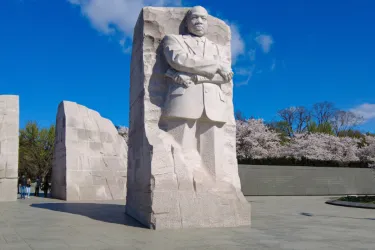
Building on what students know about national symbols and monuments, in this inquiry students will choose one historical figure to investigate the character traits, contributions, fun facts, and opinions about. The goal of this inquiry is for students to recognize and explain the significance of the people who influenced our nation.
…
Filed Under:
This inquiry focuses on the myriad of injustices inflicted upon people of color during the colonial period, and how these early interactions and acts of oppression provided a foundation for the racial injustices still experienced in America today. From Europeans’ first contact with American Indians, to the subjugation of African slaves, a hierarchy based on…

Filed Under:
This inquiry leads students through an examination of modern day United States and global politics by investigating the Internet’s role in either helping or hampering democratic processes. By investigating the compelling question, students consider the impact of increased access to information (and misinformation) on the political process, how it shapes political discourse on the individual…
Filed Under:
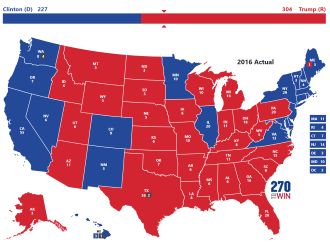
Maps can make it easy to understand complex human-geographic data. But they are also shaped by what they choose to share and leave out. This inquiry takes students through a series of political maps of the 2016 Presidential Election to consider the stories maps tell.
…
Filed Under:
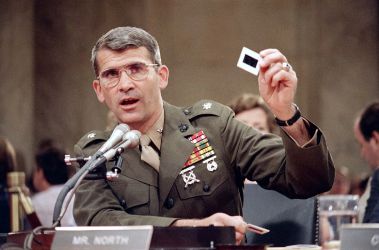
In the middle of the 1980s, a government scandal came to light when a Lebanese newspaper began writing about U.S. weapons being sold to Iran. The U.S. was selling arms through Israel to Iran in exchange for the release of hostages. The funds from those sales were being used to fund the Contras in Nicaragua,…

Filed Under:
In the middle of the 1980s, the Reagan Administration had two significant foreign policy problems. In Nicaragua, the US funded and sent military supplies to a rebel group called the Contras who were fighting the communist Sandinista government. In response to their human rights violations, Congress passed the Boland Amendment that banned aid to the…

Filed Under:
This inquiry leads students through an investigation of Isabel Wilkerson’s 2020 book, Caste: The Origins of our Discontents. The central thesis of her work is that American racism is built on a caste system. She builds her argument by highlighting Nazis Germany and the Indian caste system as she defines the central pillars of caste….

Filed Under:
This inquiry provides students with an introduction to a historical example of religious tolerance and cooperation as it evolved in Islamic Spain, also known as Al-Andalus. Muslims settled in Spain and took control from Christian Visigoths in the 8th century. Over the six centuries of Muslim rule in Spain, Muslims, Jews, and Christians lived side…

This inquiry leads students through an investigation of policy voting, i.e. aligning their own beliefs with policies of political parties and candidates. By investigating the compelling question students will research where the stand on their own beliefs, compare those beliefs to available political party platforms, then finally against candidates representing those parties (or running as…

Filed Under:
This inquiry leads students through an investigation of the Jefferson Street business district in Nashville, Tennessee. Jefferson Street has been considered, “a lab for some of the most important historical, social and cultural events in the U.S. South” (Facing north: Jefferson street, Nashville). Dave Paulson described the district as being “Nashville’s prime thoroughfare for Black…
Filed Under:
This focused one-day inquiry leads students through an investigation of the Jefferson Street business district in Nashville, Tennessee and how music can change and influence a community. Jefferson Street has been considered, “a lab for some of the most important historical, social and cultural events in the U.S. South” (Facing north: Jefferson street, Nashville). Dave…

Filed Under:
This inquiry leads students through an investigation of the history and impact of Jim Crow laws. The inquiry opens with a supporting question that encourages students to explore the opportunities and challenges that the Reconstruction posed for African Americans. This work provides a base of knowledge for students to investigate specific opportunities for African Americans…

The goal of this inquiry is help students understand the central debate about the government’s role in fostering economic opportunity over the past half century. As this is a historical inquiry, it focuses on the motivations, actions, and impacts of two particular US presidents: Lyndon Johnson and Ronald Reagan. Their economic programs stand in for…