
Inquiry For All
Search C3 Teachers Inquiries
Search Tool
The Heart of Social Studies
Inquiries

This inquiry leads students through an investigation of fair trade. By investigating the compelling question “Is Fair Trade Fair?” students evaluate the rise of fair trade as it relates to several specialty industries; such as the coffee industry. The formative performance tasks build on knowledge and skills through the course of the inquiry and helps…

Filed Under:
This inquiry leads students through an investigation of the fall of the Roman Empire. More specifically students examine whether the events that occurred in 476 CE constituted the fall of the Roman Empire or a transformation of the empire. By investigating the compelling question about whether or not the Roman Empire fell, students consider the…

This inquiry engages students in expanding their understandings of families in general and the idea that families can be both similar and different. Although much of family life may be shared—language, religion, culture, and traditions—there are important differences across these elements. The compelling question “How can families be the same and different?” offers students opportunities…

This inquiry leads students through an investigation of their families as a way to begin understanding the concepts of past and present. By answering the compelling question “What do family stories tell us about the past?” students learn about change over time. Through the use of family artifacts (e.g., photographs, marriage licenses, family trees, keepsakes),…

Filed Under:
The 1980s brought a mix of bold and unforgettable fashion trends, from preppy styles and neon windsuits to color-block outfits and sharp power suits. A lot of these trends were driven by the rise of MTV, where musicians weren’t just making hits—they were setting fashion standards. People started to move away from traditional styles, using…

Filed Under:
This inquiry leads students through an investigation of the perennial power struggle between federal and state governments to legislate. By investigating the compelling question “Who has the power?” students will consider the role of state government in initiating the best legislation for its citizens, even in cases where state law conflicts with federal law. In…
Filed Under:
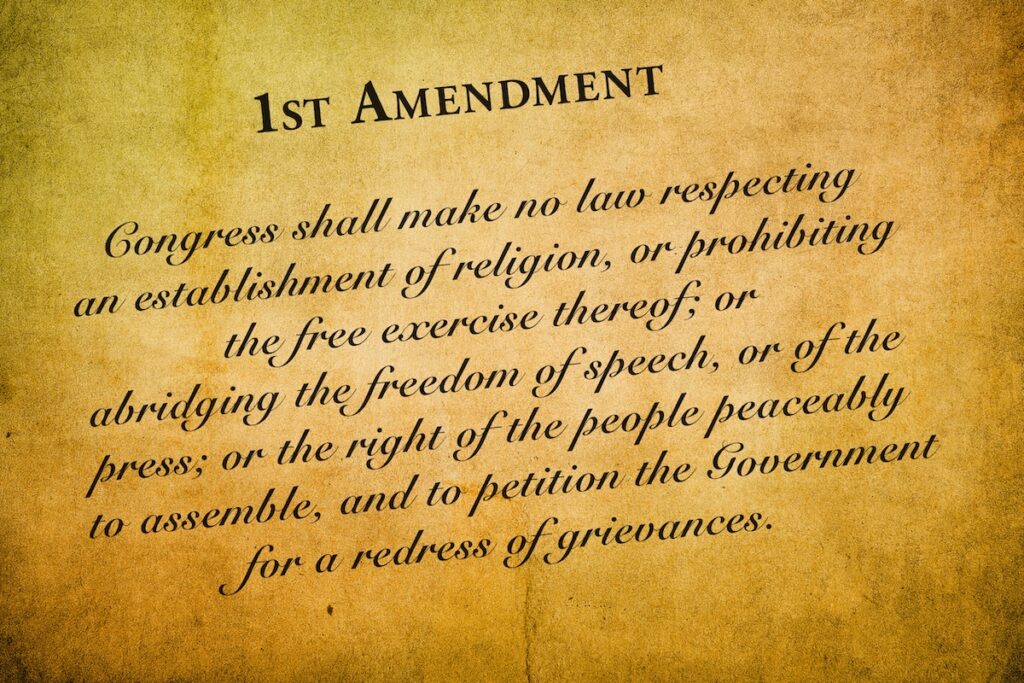
This inquiry leads students through an investigation of students’ rights and the First Amendment to the United States Constitution. By investigating the compelling question, students consider the ways in which their rights provide a unique perspective on learning about the First Amendment and the extent to which schools are “special areas,” in which various courts…

Filed Under:
This inquiry asks students to explore issues of individual responsibility and moral choice by investigating the compelling question, “I was only following orders! Is this an acceptable defense?” Students will consider Dr. Solis’s question about actions taken during the Holocaust and more as they study the history of the “superior orders” defense from its first…

Filed Under:
This inquiry leads students through an investigation of how the Korean War came to be known as the “forgotten war.” By investigating the compelling question, “Why was the Korean War ‘forgotten’?,” students investigate how a major global event could seem to have been forgotten by the American public and, subsequently, in history. The inquiry has…

Filed Under:
Nobel Prize–winning economist Milton Friedman once said, “There is a standard cliché which I am sure you have all heard, that if you have two economists in one room, you are bound to have at least three opinions.” Drawing on disciplinary experts who disagree on a fundamental free-market economic tenet, this inquiry asks students to…

Filed Under:
This inquiry focuses on the ways in which African Americans have been able to construct their own freedom in the face of injustice, violence, and white backlash following emancipation and in the era of Reconstruction and beyond. The questions, tasks, and sources in this inquiry ask students to examine the political, social, and economic successes…
Filed Under:
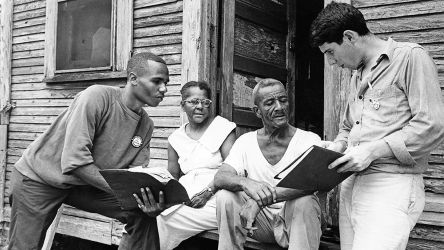
Freedom Summer was a civil rights campaign that took place in Mississippi during the summer of 1964. Hundreds of civil rights activists and volunteers, most of them college students, went to Mississippi. There, they worked with local activists to create Freedom Schools to educate Black children, register Black voters, and challenge the segregationist Democratic Party…

Filed Under:
This tenth grade annotated inquiry leads students through an investigation of the French Revolution. Adolescent students are quite concerned with challenging authority and establishing their independence within the world; the concept of revolution brings those two concerns to their most world-altering levels. This inquiry gives students an entry point into thinking like historians about the…

This inquiry leads students through an investigation of early social interactions and behaviors. By investigating the compelling question “Do I have to like everyone?” students evaluate friendship, what is a friend, how to be a friend, and how to respond when you dislike someone or they dislike you. Students will develop a deeper understanding of…

Filed Under:
This inquiry leads students through an investigation that assesses the extent to which gender roles empower or limit the agency of women. In doing so, it provides students with the opportunity to explore how women, specifically Latina and Black women, have utilized various ways to push against social norms and to expand what is considered…

This twelfth grade annotated inquiry leads students through an investigation of a hotly debated issue in the United States: the gender wage gap. The compelling question “What should we do about the gender wage gap?” asks students to grapple not only with how to quantify and interpret the gap but also to consider ways of…

This inquiry engages third-grade students in exploring world geography through the compelling question “Where are we?” This question sparks students’ intellectual curiosity through the study of geographic location and the impact of humans on their environment. Working with evidence from sources, students should understand that, although we can be in different “places,” our impact on…

This inquiry explores how communities develop and sustain themselves by examining the positive and negative impacts of development on community environments. In considering the idea that communities grow and change over time, students develop an argument with evidence that answers the compelling question “How do we shape our environment?”
…
Filed Under:
This inquiry uses the Industrial Age as a context for students to explore the compelling question “Is greed good?” The Industrial Age, often referred to derisively as the Gilded Age, brought about unprecedented economic growth and the advent of modern living. The effects of the Industrial Age were so essential to the economic and social…

This first grade annotated inquiry highlights the idea that even primary-age children can begin thinking about their civic roles in their communities and beyond. Those roles can be made real and vital to young children by exploring the traits or characteristics that represent responsible citizenship. Those traits—respecting others, behaving honestly, helping others, making and obeying…

Filed Under:
This inquiry leads students through an investigation of global citizenship, global cooperation, as well as how local solutions have been used to solve shared global issues. The inquiry is designed to open students’ eyes to their role as global citizens. It is also designed for students to uncover the similarities in issues faced by rural…

This inquiry leads students through an investigation of economic systems by focusing on the context of trade among world communities. Trading is one of the oldest forms of economic interaction among humans, yet it is also among the most complex. In examining the reasons for international trade and the exports of world communities, students should…