
Inquiry For All
Search C3 Teachers Inquiries
Search Tool
The Heart of Social Studies
Inquiries

Filed Under:
This inquiry leads students through an investigation of questions around Indigenous People’s land rights. Focusing on the construction of the Dakota Access Pipeline (DAPL), students explore how disputes over treaties and historical land bases complicate the already contentious issue of resource extraction. Students are progressively introduced to land rights issues centering on the experiences of…

This annotated kindergarten inquiry focuses on the economics concept of scarcity by developing an understanding of needs and wants and goods and services through the compelling question, “Can we get everything we need and want?” The distinctions between these constructs serve as the necessary components of an examination of the choices people must make when…

Filed Under:
By asking the compelling question “Was the New Deal a good deal?” students take on a topic with a long history and plenty of relevance for today. The inquiry uses the New Deal and the expansion of federal government programs designed to stimulate the economy and support citizens in need as a context for considering…

Filed Under:
This inquiry leads students through an investigation of specific programs of the New Deal and the systemic inequities in the implementation of those programs. Further, students will start to develop an understanding on the changing role of the federal government and form a position on what that role ought to be. In addressing the compelling…

Filed Under:
This inquiry provides students with an opportunity to learn about the New Deal in an interesting and provocative manner, through the lens of environmentalism. The inquiry establishes this context by opening with a supporting question about the environmental or conservation movement and actions in the first half of the 20th century. With this grounding, students…

Filed Under:
President Roosevelt’s “New Deal” sought to provide relief to millions of Americans, boost the American economy, and encourage Americans to enjoy everyday life. In this inquiry, students will explore how art created by the WPA and funded by the American government shaped American culture.
…
Filed Under:
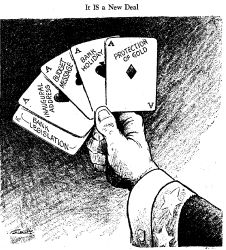
Franklin D. Roosevelt’s New Deal programs ushered in an unprecedented amount of Federal intervention in the economy, from tightening regulations on banking and investments to creating taxpayer-funded jobs across industries. However, the benefits experienced by many working families were not shared by all Americans, and many were short-lived. This inquiry requires students to weigh the…
Filed Under:
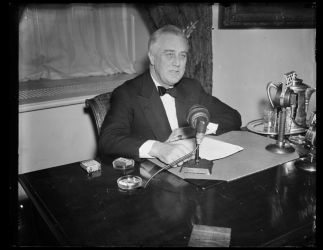
Franklin D. Roosevelt’s response to the Great Depression required an unprecedented level of involvement by the Federal government. Regardless of the FDR’s intentions, the varied realities of Americans opened the New Deal up to mixed reviews. While some newspapers accommodated supporters, many publications featured political cartoons critical of the New Deal. This inquiry asks students…
Filed Under:
While political promises are not a new phenomenon, the scale of change required by the New Deal to address Great Depression problems was unprecedented. This inquiry requires students to compare the vision shared by FDR in his inaugural address and fireside chat with the programs and initiatives enacted by the New Deal.
…
Filed Under:
This inquiry focuses on the uneven impacts of the New Deal policies with a focus on the experiences of everyday Americans living in the South. It is intended to expand students’ existing understanding of the New Deal by engaging in analysis around issues of equity and perspective. The questions, tasks, and sources in this inquiry…

Filed Under:
This inquiry focuses on the emergence, growth, and collapse of the New France colony in North America. French explorers, missionaries, traders, and settlers established an important presence in North America, beginning with Jacques Cartier’s explorations in 1534 and continuing through the 19th century. The development of the fur-trading industry, along with a relatively stable relationship…

This annotated inquiry focuses on physical geography in general and on the relationship between early (pre-1700) Native American nations and their environments in particular through the compelling question “Does where you live matter?” The compelling question highlights the idea that geography is not a neutral entity. Environments can exert an influence on human existence, but…

Filed Under:
This inquiry leads students through an investigation of prehistoric nomadic life. By investigating the compelling question “How do we know the past without written evidence?” students evaluate how nomads communicated, where they lived, and how they defined their needs based on the places they lived. The formative performance tasks build on knowledge and skills through…
Filed Under:
This lesson is another building block that seeks to address the practice of nonviolent demonstration, one of the often misunderstood aspects of the civil rights movement. By drawing the distinction between nonviolence as a tactic versus a way of life, students will be able to grasp the usefulness of nonviolence as a tactic and the…
Filed Under:
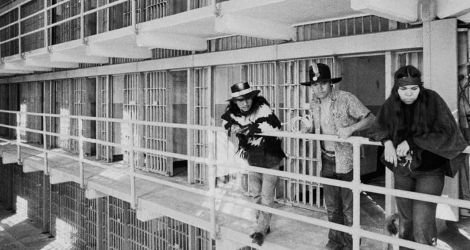
In 1969, a group of Native American activists occupied the abandoned Alcatraz Island in San Francisco Bay. The activists claimed the land under a treaty that said unused federal land should be returned to Native peoples. The occupation lasted for 19 months and drew national attention to the struggles of Native Americans and their demands…

Filed Under:
This inquiry uses the ancient and modern Olympic games as a context for students to explore the compelling question “Are the Olympics about more than sports?” The Olympics play an important role in modern society, bringing together athletes from around the world every four years to display and celebrate human athleticism; however, the Olympics are…

Filed Under:
This inquiry leads students through an investigation of the ways in which people resisted the Nazi’s during the Holocaust. Students analyze two sources to understand different ways people showed courage by resisting the Nazis themselves or in groups and the strategies they use. Overall, students will be challenged to think about the role people play…

This inquiry leads students through an investigation of rivers. By investigating the compelling question “Is the relationship between people and rivers good or bad?” students evaluate the affect that people and rivers have on each other. The formative performance tasks build on knowledge and skills through the course of the inquiry and help students understand…

Filed Under:
This 2016 Inquiry Challenge winner inquiry leads students through an investigation of electronic and paper maps as representations of the physical world. In examining the different ways in which the two mediums reflect place and positionality, students should consider the utility and relative value of different geographic representations. Through interaction with the formative performance tasks…

The students will be able to identify situations in which either maps or GPS are the most appropriate tool for navigation guidance. This is important because online guidance systems are so prevalent that some children might deem paper maps as outdated or unnecessary. The IDM builds capacity by starting with identifying situations in which guidance…
Filed Under:
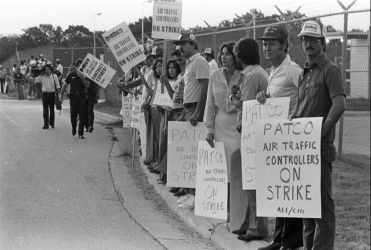
On August 3, 1981, almost 12,000 members of the Professional Air Traffic Controllers Organization (PATCO) went on strike. The union, which represented the workers who direct airplanes to ensure flight safety, demanded higher wages and better working conditions. President Reagan ordered PATCO members to return to work, and when they did not, he fired them….

Filed Under:
This inquiry is focused on the compelling question “Is protest patriotic?” The question challenges the notion that protest against authority is unpatriotic and asks students to consider whether America’s democratic institutions are strengthened through occasional opposition to American leadership. This inquiry deals with the Vietnam War era (1964–1973), focusing primarily on the national and international…