
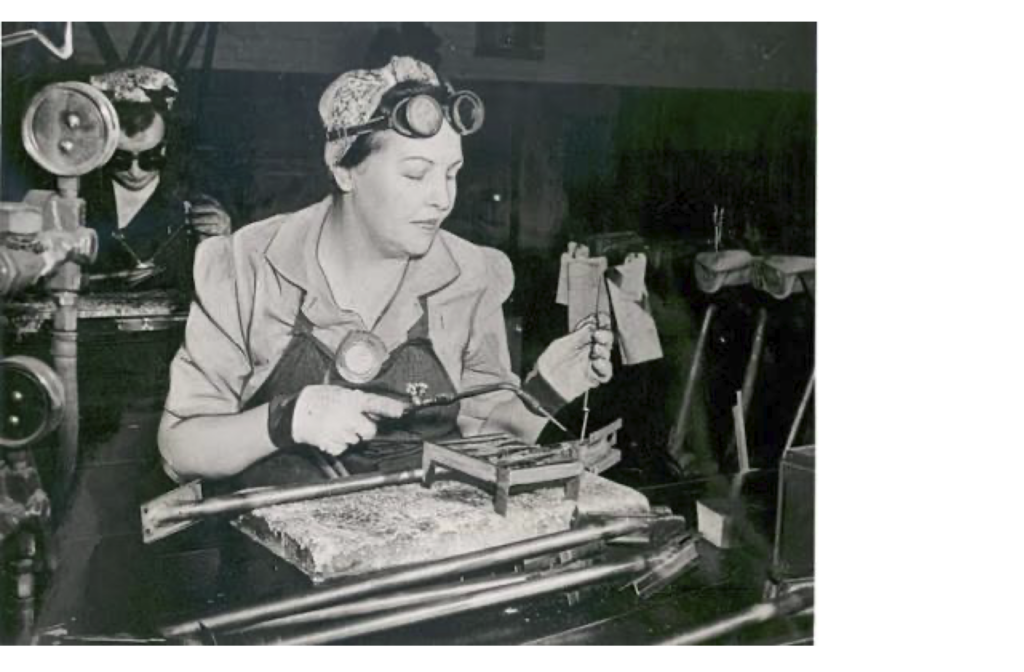
This inquiry asks students to investigate a deliberately provocative question: Is war good for women? World War II brought destruction, separation, and loss, yet it also opened forms of work, military service, public responsibility, and economic participation that had often been restricted to women before 1941. Students examine that tension rather than treating wartime change as simply progress or simply hardship. Across three supporting questions, they consider opportunities available to women, the economic consequences of wartime mobilization, and the longer-term effects of wartime changes on policy and women’s public roles.
US History
The Heart of Social Studies
Inquiries
Filed Under:
This inquiry asks students to investigate a deliberately provocative question: Is war good for women? World War II brought destruction, separation, and loss, yet it also opened forms of work, military service, public responsibility, and economic participation that had often been restricted to women before 1941. Students examine that tension rather than treating wartime change…
Filed Under:
Written for an English class reading 1984, this inquiry is meant to be investigated by students after reading the novel. This inquiry challenges students to evaluate Orwell’s description of surveillance and determine if it is becoming a reality.
…
Filed Under:
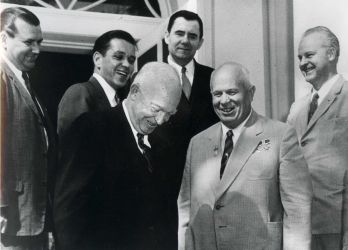
Even as the Cold War escalated in the 1950s and early 1960s, American presidents took steps to try to ease tensions with the Soviet Union. While it is difficult to quantify the impact of diplomacy and cultural programs, they were an integral piece of both American and Soviet foreign policy. In an era often remembered…
Filed Under:
Commissioned in 1967, the Pentagon Papers were a secret government study that revealed a pattern of government deception regarding the scope and purpose of American actions in Vietnam. In 1971, Daniel Ellsberg, a former military analyst who had worked on the report, leaked it to the media. The Pentagon Papers fueled public distrust in the…
Filed Under:
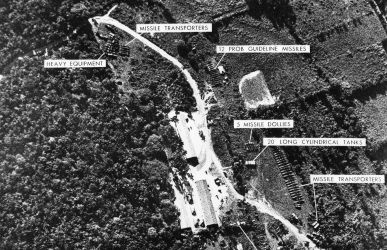
In October 1962, the U.S. discovered that the Soviet Union was constructing secret nuclear missile sites in Cuba, sparking a 13-day confrontation that brought the superpowers to the brink of nuclear war. President John F. Kennedy responded by establishing a naval “quarantine” around the island and demanding the immediate removal of all offensive weapons. Soviet…
Filed Under:
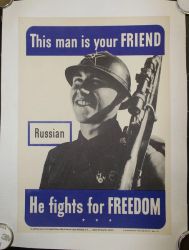
During World War II, the Soviet Union was portrayed as a key ally in the fight against fascism through posters, films, and newspaper headlines. But by the late 1940s, that alliance had shifted, and the Soviet Union was seen as an enemy. While the U.S. and Soviet Union never fought directly, they spent decades locked…
Filed Under:
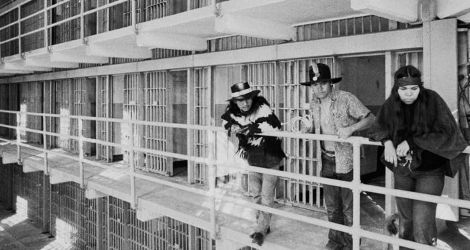
In 1969, a group of Native American activists occupied the abandoned Alcatraz Island in San Francisco Bay. The activists claimed the land under a treaty that said unused federal land should be returned to Native peoples. The occupation lasted for 19 months and drew national attention to the struggles of Native Americans and their demands…
Filed Under:
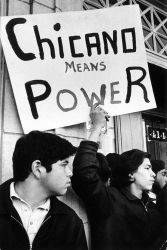
In the late 1960s, Chicano activists in East Los Angeles started a newspaper and magazine called La Raza that covered the struggles faced by Mexican Americans. Raul Ruiz was a Chicano activist, journalist, and photographer who joined the staff of La Raza. Ruiz covered student walkouts, marches, protests against the Vietnam War, and the often…
Filed Under:
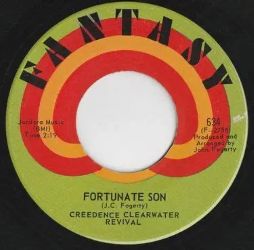
Music has long served as a powerful vehicle for protest, bypassing political noise to unite people and express collective frustration. During the Vietnam War, this artistic rebellion peaked as musicians used their platforms to directly challenge government policies. Creedence Clearwater Revival’s 1969 anthem “Fortunate Son” emerged as a defining example of anti-war dissent by targeting…
Filed Under:
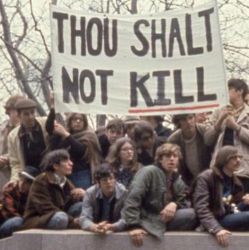
After the United States formally began sending troops to Vietnam in 1965, many Americans became increasingly frustrated with the war. The United States did not see the early successes they thought they would, and as a result, decided to institute a draft in 1969 to increase the number of soldiers available to fight in Vietnam….