
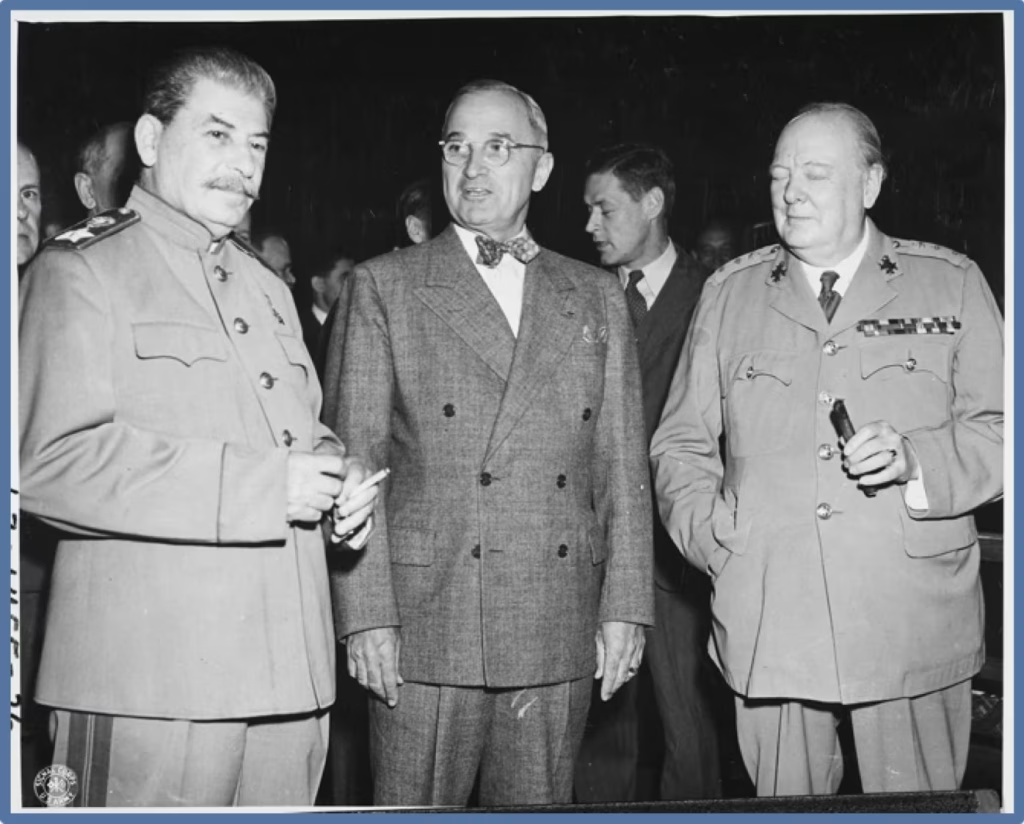
This inquiry leads students through an investigation of the causes of the Cold War by examining events through the perspective of both the Soviet Union and the United States. By investigating the compelling question “Who’s to blame for the Cold War?” students evaluate these events in consideration of the historiography, using the work of several preeminent Cold War historians, and the consequences of assigning blame to either country. The formative performance tasks build on knowledge and skills through the course of the inquiry and help students recognize different perspectives in order to better understand the ways in which mutual concerns and fears culminated in global tensions. Students create an evidence-based argument about whether anyone should be assigned blame in starting the Cold War after considering the tensions that emerged during and after World War II, perception of the actions taken by the United States and Soviet Union, assessing historiographical viewpoints, and considering how assigning blame affects perceptions of the actions of others.
Tier 1
The Heart of Social Studies
Inquiries
Filed Under:
This inquiry leads students through an investigation of the causes of the Cold War by examining events through the perspective of both the Soviet Union and the United States. By investigating the compelling question “Who’s to blame for the Cold War?” students evaluate these events in consideration of the historiography, using the work of several…

This inquiry leads students through an investigation of regionalization by studying Kentucky. By investigating the compelling question about whether or not Kentucky is a southern state, students will need to consider how the study of Kentucky provides a unique lens for thinking about the “what” and “where” of the south. In investigating the people and…

Filed Under:
This 2016 Inquiry Challenge winner leads students through an investigation of the actions made by ordinary people during the Holocaust: to participate, to help, or to stand by. By investigating the compelling question “Are bystanders guilty too?” students evaluate the different routes of action/inaction, as well as the associated risks. The formative performance tasks build…
Filed Under:
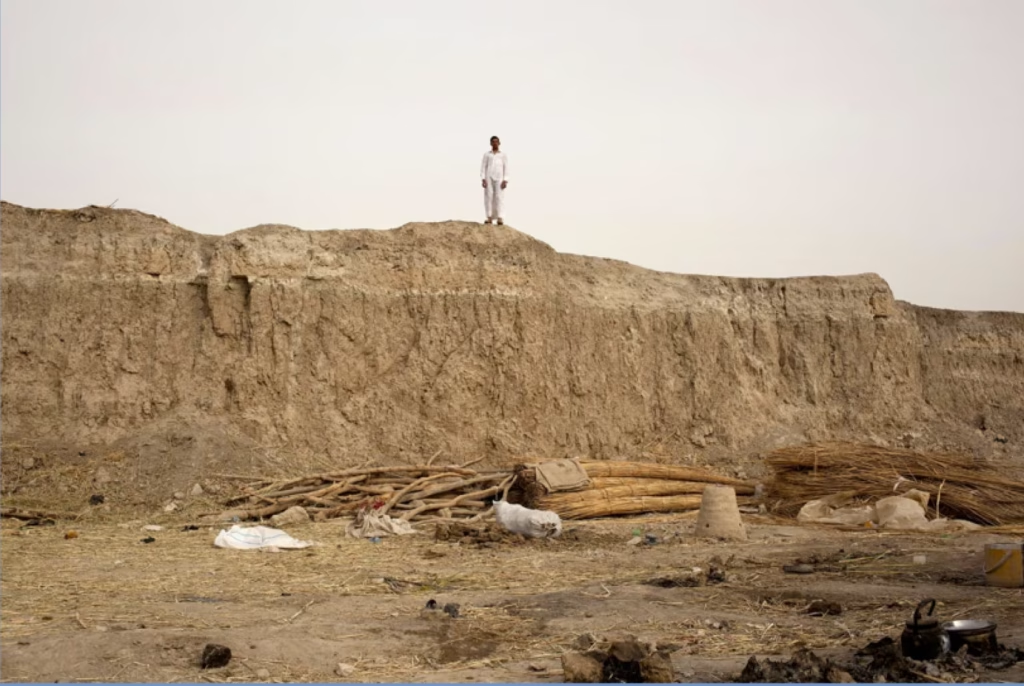
This 2016 Inquiry Challenge winner inquiry leads students through an investigation of water access in the Middle East using various sources that consider geographical, political and economic issues. By investigating the compelling question, students examine the geography of the region, including environmental and demographic relationships, the ecological impact of accessing water, and the subsequent political…

Filed Under:
This 2016 Inquiry Challenge winner inquiry asks students to explore the cultural diversity in Appalachia. Students look across artisan crafts and artifacts, music, and literature to investigate their culture. Every place is home to someone and it is important to look at what makes each of our homes special. The culture students are looking at…

Filed Under:
This 2016 Inquiry Challenge winner inquiry leads students through an investigation of electronic and paper maps as representations of the physical world. In examining the different ways in which the two mediums reflect place and positionality, students should consider the utility and relative value of different geographic representations. Through interaction with the formative performance tasks…

This inquiry leads students through an investigation of policy voting, i.e. aligning their own beliefs with policies of political parties and candidates. By investigating the compelling question students will research where the stand on their own beliefs, compare those beliefs to available political party platforms, then finally against candidates representing those parties (or running as…

Filed Under:
This 2016 Inquiry Challenge winner leads students through an investigation of ancient Hebrew history and Judaism by using various sources that consider the historical and theological foundations, as well as issues related to geography and place. By investigating the compelling question, students examine the history of the ancient Hebrew people, the principles that form the…

Filed Under:
This inquiry leads students through an investigation of human-environment interactions using the ahupua’a of Waimanalo and Kailua as a case study. By investigating the compelling question, students examine the environmental particulars of their region, the ways in which humans have historically interacted with the environment, and the current environmental characteristics. This inquiry embeds the Taking…

Filed Under:
This inquiry leads students through an examination of modern day United States and global politics by investigating the Internet’s role in either helping or hampering democratic processes. By investigating the compelling question, students consider the impact of increased access to information (and misinformation) on the political process, how it shapes political discourse on the individual…