
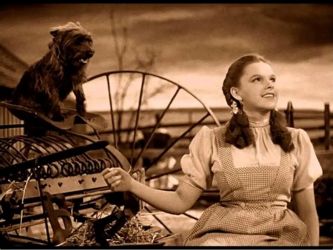
In this lesson, students will analyze two songs—“Brother, Can You Spare a Dime?” by Bing Crosby and “Over the Rainbow” by Judy Garland—to explore how each portrays the American Dream. They will compare and contrast the songs’ lyrics with their own understanding of the American Dream, examining themes of hope, struggle, and disillusionment. By the end of the lesson, students will use their annotations to evaluate whether the American Dream is presented as an achievable reality or an unattainable ideal.
Building Blocks
The Heart of Social Studies
Inquiries
Filed Under:
In this lesson, students will analyze two songs—“Brother, Can You Spare a Dime?” by Bing Crosby and “Over the Rainbow” by Judy Garland—to explore how each portrays the American Dream. They will compare and contrast the songs’ lyrics with their own understanding of the American Dream, examining themes of hope, struggle, and disillusionment. By the…

Filed Under:
In this lesson, students explore how music can symbolize national identity by analyzing two iconic songs: God Bless America by Irving Berlin and This Land Is Your Land by Woody Guthrie. They examine God Bless America as a representation of nationalism and American exceptionalism, and This Land Is Your Land as a response that conveys…

Filed Under:
Graffiti has often been seen as nothing more than vandalism, giving communities a bad reputation and reinforcing the idea that cities and urban areas are unsafe. But as more people move from big cities to smaller towns, the role of graffiti is starting to shift. Communities are now welcoming artists to create murals that celebrate…

Filed Under:
Propaganda has been a powerful tool since the advent of the written word, reflecting humanity’s ongoing efforts to influence opinions and shape behavior. During World War II, propaganda reached new heights, exploiting people’s hopes, fears, and uncertainties in a world fraught with chaos and mistrust. With global conflict blurring the lines between friend and foe,…

Filed Under:
The Great Migration reshaped Black communities as millions sought more—more economic opportunity, more cultural expression, and deeper connections to their heritage. Above all, Black Americans aimed to define themselves as both a powerful, unified community: distinctly Black and undeniably American. The art of the Harlem Renaissance became a bold declaration of this identity, radiating power,…
Filed Under:
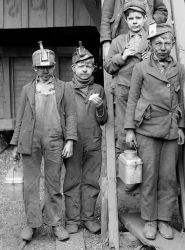
In many societies, childhood is seen as a time of innocence, free from the burdens and complexities of adulthood. It’s a time of frivolity and joy and is often depicted nostalgically in literature and art. However, the realities of childhood have not always reflected this depiction. Childhood and its experiences depended on a variety of…

Filed Under:
During the Gilded Age, political cartoons emerged as a powerful tool to critique societal issues and influential figures, offering a mix of humor, symbolism, and biting commentary. While industrialists like Andrew Carnegie and John D. Rockefeller were celebrated by some as “captains of industry” for driving progress and innovation, they were vilified by others as…
Filed Under:
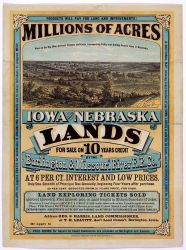
Before the advent of recorded music, entertainment took place primarily around the family piano. “Sheet music” showed people who could read musical notations how to play and sing along. Sheet music entertained the masses and became a vehicle for social and political commentary, and cultural reflection and exchange. Sheet music of the mid to late…
Filed Under:
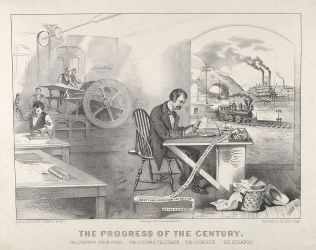
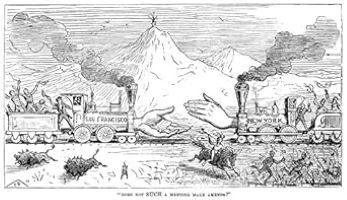
Technology shapes society and identity, both in the past and present. Americans have embraced technology like steam engines, railroads, and the telegraph to solve problems and push boundaries. But technology can also have negative impacts on American society. By exploring the role of technology in history, we can better understand how it has shaped the…
Filed Under:
Artists during the 19th century portrayed the values of Manifest Destiny—the belief that the expansion of the United States across the North American continent was both justified and inevitable—through symbolic imagery, dramatic landscapes, and depictions of progress and civilization overcoming wilderness. What they choose to include, and how they chose to depict those objects, influence…