
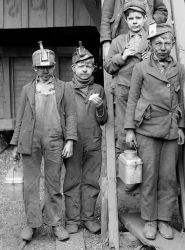
In many societies, childhood is seen as a time of innocence, free from the burdens and complexities of adulthood. It’s a time of frivolity and joy and is often depicted nostalgically in literature and art. However, the realities of childhood have not always reflected this depiction. Childhood and its experiences depended on a variety of factors during the Gilded Age, class being one of the most prominent. The photography set in this inquiry exercise shows the stark contrast between how childhood was experienced by different classes – from children who were able to indulge in play to those who were forced to work in factories and mines. Together, the images reflect the overall inequities of the Gilded Age – the widening chasm between the haves and have-nots – that led to action during the Progressive Movement.
Login to add Inquiry to Stack
About the inquiry
Compelling Question
What did it mean to be a child during the Gilded Age?
Standards
D2.His.9.9-12. Analyze the relationship between historical sources and the secondary interpretations made from them.
Instructional Snapshot
Class begins with a brief discussion about how students and society view childhood. Students should discuss the idea that childhood is seen as a time of innocence when play is their main concern and they are protected from some of the harsh realities of the world. However, during the Gilded Age, those harsh realities weren’t kept from all children. Introduce to students that a variety of factors, but mostly class and race, determined whether a child experienced a sheltered childhood or was forced to take on the responsibilities of adults. Students are divided into pairs to sort through the Childhood in the Gilded Age Photograph Set and study each image using a See-Think-Wonder strategy as outlined by the Analyzing Photographs guide from the Library of Congress. Students should observe what is depicted in the image, reflect on the possible story behind the photograph, and question what they are looking at and how it fits into the larger topic of the inquiry. With their partner, students then sort the photographs into two categories and label each (they may record their answers on the Student Graphic Organizer). Possible categories could be “Wealth” and “Poverty,” “Ideal” and “Reality,” “Protected” and “Not Protected.” Once the categories are labeled, students work together to use details from the photographs as evidence to defend the titles of their categories.
Formative Tasks
COLLABORATE: Using the “Analyzing Photographs” guide from the Library of Congress, closely study each photograph from the Childhood in the Gilded Age Photograph Set.
DELIBERATE: Sort the photographs into two categories that make sense to you, and label your categories.
PRODUCE: Work together to defend why your category titles are appropriate and use details from the photographs to justify your choices.
Sources
Source: Childhood in the Gilded Age Photograph Set, Library of Congress
Summative Performance Task
No data found.
Taking Informed Action
No data found.