
The Great Migration reshaped Black communities as millions sought more—more economic opportunity, more cultural expression, and deeper connections to their heritage. Above all, Black Americans aimed to define themselves as both a powerful, unified community: distinctly Black and undeniably American. The art of the Harlem Renaissance became a bold declaration of this identity, radiating power, resilience, and creative agency. Through paintings, photographs, and poetry, this inquiry invites students to explore how Black artists captured the hopes, struggles, and transformations of this pivotal era.
Login to add Inquiry to Stack
About the inquiry
Compelling Question
What does art tell us about the Harlem Renaissance?
Standards
D2.His.6.9-12. Analyze the ways in which the perspectives of those writing history shaped the history that they produced.
Instructional Snapshot
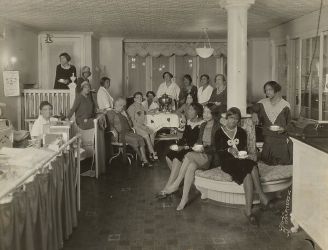
Begin class with a brief flashback on the Great Migration, highlighting why Black communities moved—seeking greater economic opportunities, cultural expression, and connections to their heritage. Emphasize how this migration set the stage for the Harlem Renaissance (5 minutes). Next, show students two images: “Block Party” and “Tea Time at C.J. Walker’s Beauty Salon.” Ask them to identify three things they see, two things they wonder about, and one thing that surprises them. After a quick share with a partner, guide them to discuss: What was Black life like in Harlem? (10 minutes). Transition into a guided reading of Langston Hughes’ “The Negro Speaks of Rivers.” Pause to explain historical references like the Euphrates, symbolizing the dawn of civilization, and the Mississippi, evoking slavery and liberation. Help students unpack the extended metaphor and consider who the “I” represents, connecting the poem to broader themes of Black history and identity (15 minutes). Have students form groups of four to connect the poem’s themes of power and independence to the images they analyzed. Encourage them to point out vivid imagery and link it to visual elements in the photos. Optionally, introduce the cosmogram from the Schomburg Center in Harlem, explaining how it artistically honors Hughes’ poem, even though it’s a modern creation (15 minutes). To synthesize, use ChatGPT to generate 3-4 claims answering the compelling question: What does art tell us about the Harlem Renaissance?? Students will select a claim and support it with evidence from the poem and images, understanding AI as a thought partner in the process (15 minutes). As an extension, invite students to find other artworks or literary pieces that convey similar themes of power, resilience, and agency in Black communities.
Formative Tasks
COLLABORATE: Conduct a modified See, Think, Wonder using the two images: “Block Party” (Source A) and “Tea Time at C.J. Walker’s Beauty Salon” (Source B). Identify key details, interpret their significance, and note any questions they raise. Then, have students compare their observations with a partner to deepen their understanding.
DELIBERATE: Read Langston Hughes’ poem “The Negro Speaks of Rivers.” What do you believe is the central theme of the poem? Discuss how the poem’s message connects to the themes and imagery in the painting and photograph.
PRODUCE: Develop a clear claim that answers the compelling question: How did the art of the Harlem Renaissance express power and agency? Support your claim with specific evidence from the images and poem.
Sources
Source A: "Block Party", Archibald Motley
Source B: "Tea Time at C.J. Walker’s Beauty Salon", James Van der Zee
Source C: "The Negro Speaks of Rivers", Langston Hughes
Summative Performance Task
No data found.
Taking Informed Action
No data found.