
During the Gilded Age, political cartoons emerged as a powerful tool to critique societal issues and influential figures, offering a mix of humor, symbolism, and biting commentary. While industrialists like Andrew Carnegie and John D. Rockefeller were celebrated by some as “captains of industry” for driving progress and innovation, they were vilified by others as “robber barons” who amassed vast wealth at the expense of workers and ethics. This lesson uses political cartoons to explore these conflicting perspectives and the broader inequalities of the era. By analyzing the symbols, exaggeration, and tone in these visual commentaries, students uncover how cartoonists challenged the unchecked power and wealth of industrialists.
BBI
The Heart of Social Studies
Inquiries

Filed Under:
During the Gilded Age, political cartoons emerged as a powerful tool to critique societal issues and influential figures, offering a mix of humor, symbolism, and biting commentary. While industrialists like Andrew Carnegie and John D. Rockefeller were celebrated by some as “captains of industry” for driving progress and innovation, they were vilified by others as…
Filed Under:
Before the advent of recorded music, entertainment took place primarily around the family piano. “Sheet music” showed people who could read musical notations how to play and sing along. Sheet music entertained the masses and became a vehicle for social and political commentary, and cultural reflection and exchange. Sheet music of the mid to late…
Filed Under:
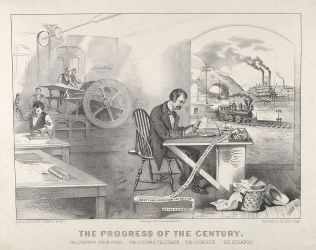
Technology shapes society and identity, both in the past and present. Americans have embraced technology like steam engines, railroads, and the telegraph to solve problems and push boundaries. But technology can also have negative impacts on American society. By exploring the role of technology in history, we can better understand how it has shaped the…
Filed Under:
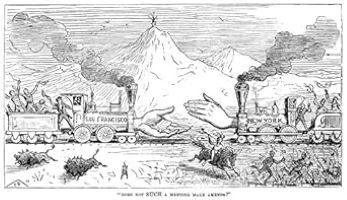
Artists during the 19th century portrayed the values of Manifest Destiny—the belief that the expansion of the United States across the North American continent was both justified and inevitable—through symbolic imagery, dramatic landscapes, and depictions of progress and civilization overcoming wilderness. What they choose to include, and how they chose to depict those objects, influence…

Filed Under:
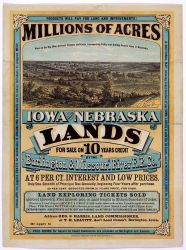
Westward Expansion, a defining chapter in American history, was the 19th-century movement of settlers, entrepreneurs, and immigrants across the North American continent. Westward Expansion was a complex and transformative era that reshaped the United States geographically, economically, and socially. While it brought economic growth and the realization of national ambitions, it also left a legacy…
Filed Under:
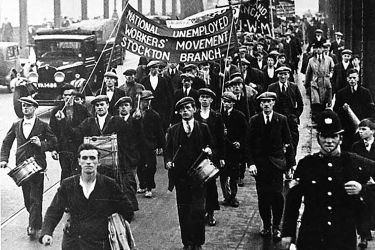
Patriotism is reflected in protests when it is grounded in the ideas of furthering liberty, freedom, and justice for all. The rights and freedoms experienced by those living in the United States were hard fought over time, and the result of the tenacious organizing and protests of everyday citizens. By analyzing images of protests over…
Filed Under:
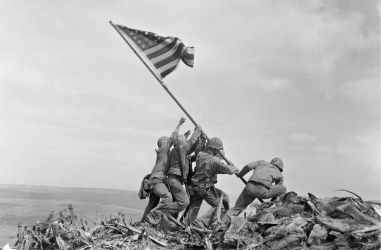
Actions motivated by a love for one’s country are complex, especially during wartime. We often view history through a sentimental lens, particularly regarding World War II and Pearl Harbor. We tend to make assumptions about the acts of patriotism in which everyday Americans must have engaged, influenced by portrayals in films and literature. However, it…
Filed Under:
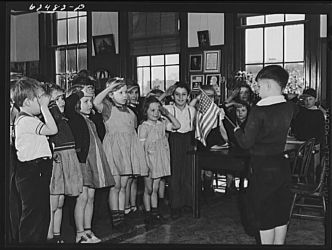
Public education in America has been a tool for fostering social cohesion and driving reform. While few would dispute that public schools have an important mission in shaping an informed citizenry, the promotion of patriotic activities in schools has sparked controversy over time. Patriotism in public education does not need to be performative, coerced, or…
Filed Under:
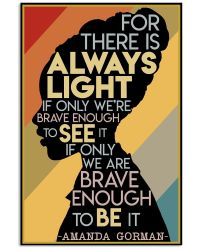
Patriotism emerges in various methods of and reasons for protesting when grounded in the ideas of liberty, freedom, and justice for all. The rights and freedoms experienced by those in the United States were hard fought over time and due to the tenacious organizing and protests of everyday citizens. Because the arts can act as…
Filed Under:
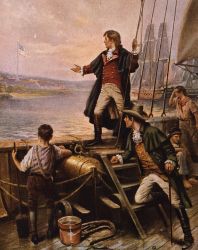
The phrase “Land of the Free and the Home of the Brave” comes from The Star-Spangled Banner, written by Francis Scott Key during the War of 1812. Over time, these words–freedom and bravery–have become hallmarks of America’s identity, reflecting the nation’s ideals of liberty and courage. Yet, the journey to embody these values has been…