
Patriotism is reflected in protests when it is grounded in the ideas of furthering liberty, freedom, and justice for all. The rights and freedoms experienced by those living in the United States were hard fought over time, and the result of the tenacious organizing and protests of everyday citizens. By analyzing images of protests over time, students see a glimpse of the types of protests, the variety of people, and the issues that shaped the country we are today. These images reflect how protests reflect patriotism as people stand up for liberty, freedom, and justice for all, even though we may not all agree.
Login to add Inquiry to Stack
About the inquiry
Compelling Question
What does patriotism in the United States look like? (Protest)
Standards
D2.Civ.12.9-12. Analyze how people use and challenge local, state, national, and international laws to address a variety of public issues.
Instructional Snapshot
Begin by organizing students in groups of 3-4. Ask each group to write a list of words they think of when they hear the word “patriotism”. Then, ask each group to use the list they created to formulate a definition of patriotism. Debrief as a whole class by having one student from each group share their group’s definition. Keep track of similarities and differences among the different definitions. (10 minutes)
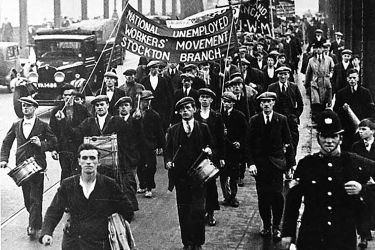
Next, students will do a gallery walk to analyze the images in Sources A-J. Students will use a graphic organizer to note different time periods, groups, and issues represented in the images and to help them keep track of their thinking as they engage in the observation, reflection, and questioning strategy to analyze the images. (15 minutes)
Students will regroup to share their analysis and to update their original definition of patriotism. Each student will use their group’s definition to answer the compelling question, “what does patriotism look like in protests”, citing evidence from the images. Finally, do a whip-around for students to share their response with the class. (10 minutes)
Formative Tasks
COLLABORATE: Brainstorm a list of words students think of when they hear the word “patriotism”, then formulate a definition from their list of words.
DELIBERATE: Engage in a gallery walk to analyze images of different types of protests over time, using a graphic organizer to note differ time periods, groups, methods, and issues.
PRODUCE: Update the definition of “patriotism” and use the definition to respond to the compelling question, “what does patriotism look like in protests” citing evidence from the images.
Sources
Sources A-H: Protest Overtime Image Document Set, Library of Congress
Summative Performance Task
No data found.
Taking Informed Action
No data found.