
There has been much debate about the role of corporations and how they function in today’s global society. Arguments abound as to whether or not these entities pay their fair share of taxes to the governments of the countries in which they operate and whether or not they have a social responsibility to act according to basic principles of human rights. Although corporations are said to provide jobs and direct investment in the economy, some argue that corporations should expand their missions to solve local and global problems. After considering the costs, benefits, and realities of corporate social responsibility (CSR), students should be able to make claims supported by evidence as to whether corporations should develop a conscience beyond their bottom line. This inquiry embeds the Taking Informed Action sequence throughout.
9-12
The Heart of Social Studies
Inquiries

There has been much debate about the role of corporations and how they function in today’s global society. Arguments abound as to whether or not these entities pay their fair share of taxes to the governments of the countries in which they operate and whether or not they have a social responsibility to act according…

Filed Under:
The compelling question “Can peace lead to war?” offers students an opportunity to explore the historic controversy surrounding the extent to which the Treaty of Versailles caused World War II. Students consider not only the stipulations of the peace treaty but also the nature of historical interpretation by following the voices of historians throughout the…
Filed Under:
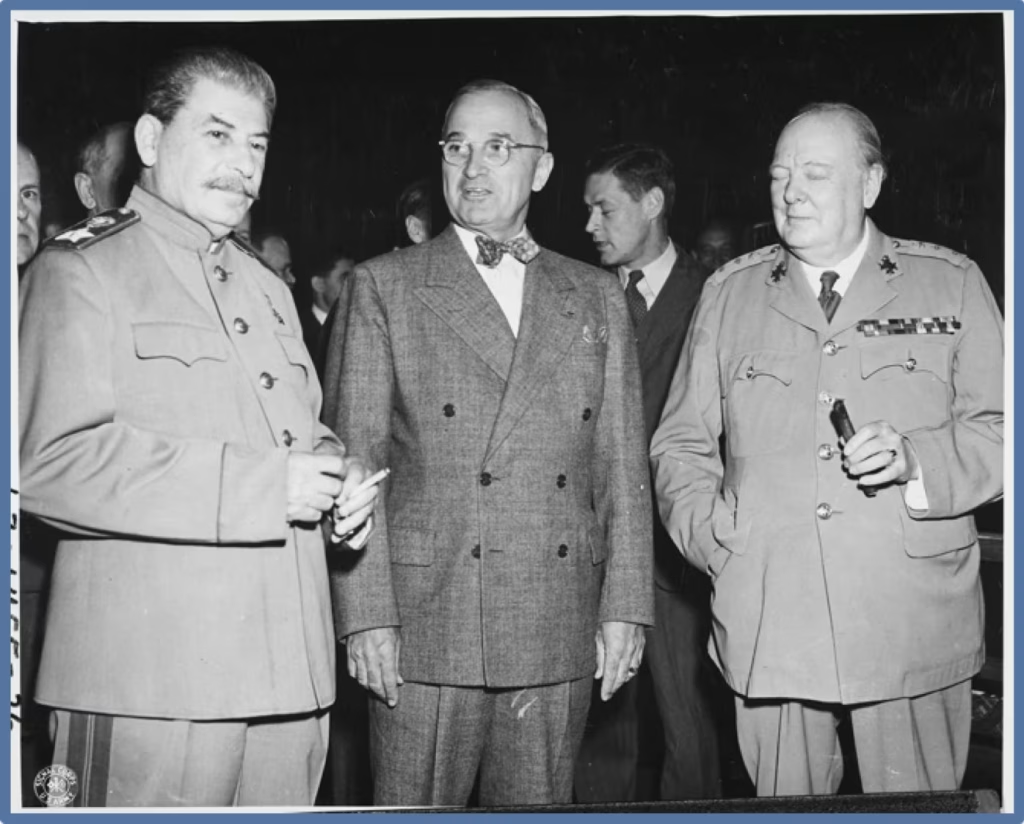
This inquiry leads students through an investigation of the causes of the Cold War by examining events through the perspective of both the Soviet Union and the United States. By investigating the compelling question “Who’s to blame for the Cold War?” students evaluate these events in consideration of the historiography, using the work of several…

This inquiry leads students through an investigation of regionalization by studying Kentucky. By investigating the compelling question about whether or not Kentucky is a southern state, students will need to consider how the study of Kentucky provides a unique lens for thinking about the “what” and “where” of the south. In investigating the people and…

Filed Under:
This 2016 Inquiry Challenge winner leads students through an investigation of the actions made by ordinary people during the Holocaust: to participate, to help, or to stand by. By investigating the compelling question “Are bystanders guilty too?” students evaluate the different routes of action/inaction, as well as the associated risks. The formative performance tasks build…

This inquiry leads students through an investigation of policy voting, i.e. aligning their own beliefs with policies of political parties and candidates. By investigating the compelling question students will research where the stand on their own beliefs, compare those beliefs to available political party platforms, then finally against candidates representing those parties (or running as…

Filed Under:
This inquiry leads students through an investigation of human-environment interactions using the ahupua’a of Waimanalo and Kailua as a case study. By investigating the compelling question, students examine the environmental particulars of their region, the ways in which humans have historically interacted with the environment, and the current environmental characteristics. This inquiry embeds the Taking…

Filed Under:
This inquiry leads students through an examination of modern day United States and global politics by investigating the Internet’s role in either helping or hampering democratic processes. By investigating the compelling question, students consider the impact of increased access to information (and misinformation) on the political process, how it shapes political discourse on the individual…

Filed Under:
How did the Age of Reason writers influence the people of the 18th century to think differently about themselves and the world around them? How did their writings motivate people to take action to fight for their basic human inalienable rights and even launch violent revolutions for social and political freedoms to achieve it in…

This inquiry leads students through an investigation of economics and the impact of new technologies on our world. By investigating the compelling question “Is the United States ready to be a cash free society?” students evaluate the advantages and disadvantages of abandoning the dollar for the new methods of payments. The formative performance tasks build…