
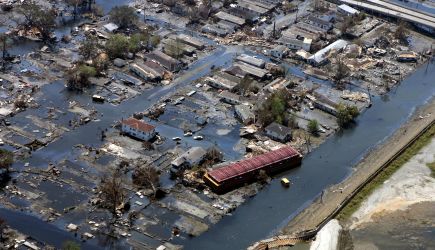
Hurricane Katrina struck the Gulf Coast in August of 2005, leaving behind catastrophic damage and flooding. Relief efforts were supported by multiple government agencies, international partners, and NGOs, but still took years. In its aftermath, Americans looked back on how the response was handled and its larger impact on society. In this inquiry students will investigate the compelling question, “How do we learn from tragedy?”
Historical Memory
The Heart of Social Studies
Inquiries
Filed Under:
Hurricane Katrina struck the Gulf Coast in August of 2005, leaving behind catastrophic damage and flooding. Relief efforts were supported by multiple government agencies, international partners, and NGOs, but still took years. In its aftermath, Americans looked back on how the response was handled and its larger impact on society. In this inquiry students will…
Filed Under:
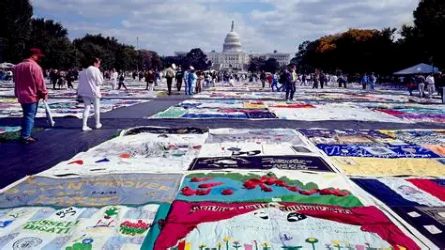
AIDS was first recognized by the CDC in 1981. Despite tens of thousands of Americans dying of the disease in the 1980s, President Reagan did not publicly mention AIDS until 1985 and did not deliver a speech on it until 1987. In this inquiry students will investigate the compelling question, “How do we memorialize loss?”
…
Filed Under:
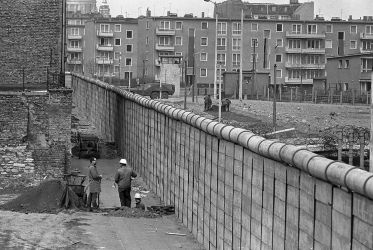
The United States strongly supported Western Europe during the Cold War against the USSR. Both U.S. and USSR leaders through the Cold War varied on their willingness to negotiate with each other. In this inquiry, students will use the Berlin Wall as a historical case study to answer the compelling question, “What did Cold War…

Filed Under:
National Review Magazine was founded in 1955 by William F. Buckley Jr. The publication is largely credited with formalizing the modern conservative political platform. As the magazine reached readers across the country, it became a vehicle for spreading ideas, building support, and connecting like-minded individuals. In this inquiry, students will investigate the compelling question, “How…
Filed Under:
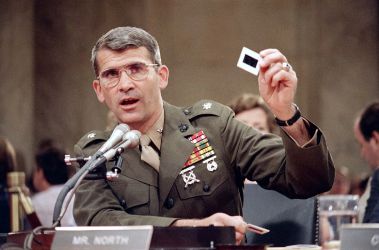
In the middle of the 1980s, a government scandal came to light when a Lebanese newspaper began writing about U.S. weapons being sold to Iran. The U.S. was selling arms through Israel to Iran in exchange for the release of hostages. The funds from those sales were being used to fund the Contras in Nicaragua,…
Filed Under:
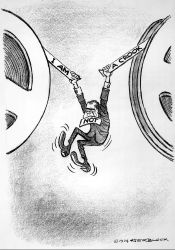
In 1972, five men were arrested for breaking into the Democratic National Committee headquarters in Washington D.C., while trying to bug the offices and collect information about the upcoming election. The break-in led to a series of investigations that revealed a pattern of similar illegal activity. Then, officials in the Nixon administration were accused of…