







Reflections on Inquiry

Authored by Katherine Oliver What is the biggest fear incoming teachers have when preparing for their first classroom? While there may seem to be a myriad of options from poor classroom management to a student uprising, at the heart of every worry is the ability to get student buy-in. Student engagement, behavior, and work ethic […]

Chances are if you’re reading this you are already an inquiry teacher who trusts IDM as a process for student engagement and learning. A series of past posts has already detailed the use of questions, tasks, and sources in specific blueprints for lowering barriers to entry for student engagement. But, how do I balance these […]

Many social studies teachers get lost in source selection. We can’t be blamed for it. It’s a hazard of the job. Our passion for learning and for social studies instruction leads us down rabbit holes that force us to make difficult instructional choices about what to share with students and what sources best fit the […]

Oftentimes the best learning happens in the most organic and natural ways. Learning happens when we are genuine. Too often it is easy to let complicated procedures or a set of rules get in the way of that. We see a really cool activity that involves setting up a crime scene in our classroom and […]

Student engagement fluctuates for a variety of reasons, some of the most difficult to control being personal, which often leads to greater barriers to entry. We can think about personal barriers to entry as any internal or external factor impacting a student’s access to a lesson, often beyond the teacher’s control. These might include who […]

Long gone are the days of the “sage on the stage” social studies teacher who delivered instruction through lecture and asked students to recall content on multiple choice tests. A surge pushing teachers to engage students in social studies skills that social scientists use on a daily basis (asking questions, accomplishing tasks, and analyzing sources) […]

Over the past several months, I have been embarking on my Building Block Inquiry (BBI) journey. When I first read about this approach to inquiry, I was excited; it truly seemed like the silver bullet, or maybe a Trojan horse, to encourage even the most skeptical peers and colleagues to adopt inquiry in their curriculum, […]

2025 was not just another year; it marked the beginning of a new chapter in my journey as an educator. I started the year at Morgantown High School in Morgantown, West Virginia, proudly serving as a classroom teacher, academic coach, and department chair. It was a great school, and I loved my work there. But […]

A class of 9th graders stand in a semi circle facing one wall of their classroom. The question, “Is progress positive?” is posted above three blank papers. They each hold one to three small sticky notes, and each note contains a question which they’ve spent the better part of their class period generating and refining. […]

In my work on building a chatbot to support inquiry design (I’m calling it deep IDM), a nagging issue has been the overwhelmingness of AI. Guessing you’ve had this experience where you ask a chatbot for some information, feedback on an idea, inspiration, or whatever, and the response is over the top. (here / here […]

I’m working with ChatGPT to build a conceptual framework for a chatbot that would support teachers in designing inquiry lessons using the Inquiry Design Model. My work began with an exchange about design parameters, features, and the structure of a chatbot to scaffold teachers through the challenges of designing an inquiry. We’ve learned over the […]

Time present and time pastAre both perhaps present in time future,And time future contained in time past.If all time is eternally presentAll time is unredeemable. —T.S. Eliot, Burnt Norton Teachers know all so well the unredeemable quality of time. It’s in short supply. Time constrains and fixes us in place. It bounds us to efficiencies […]

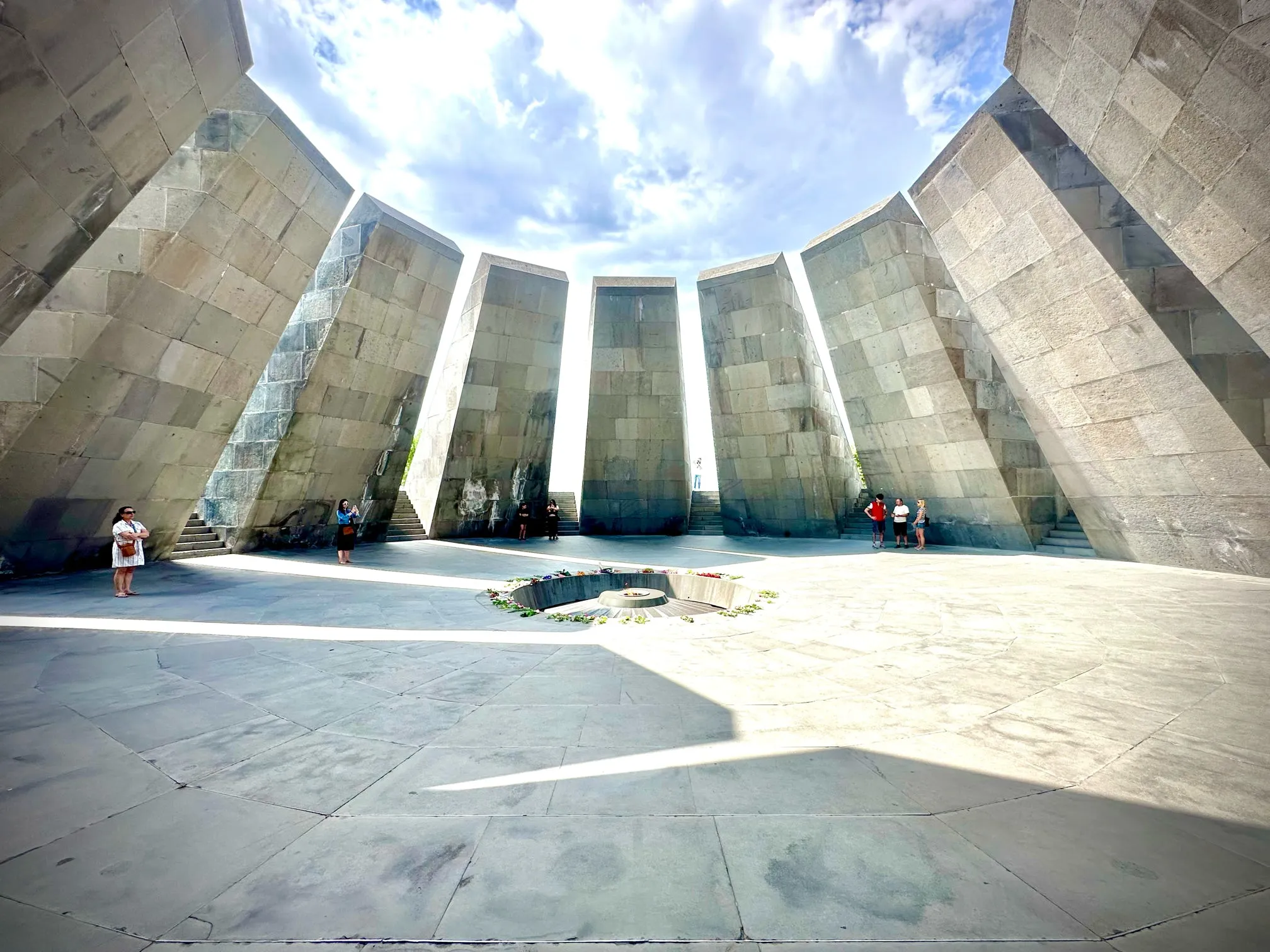
"Tsitsernakaberd, or "Swallow’s Fortress," was built in 1965 to honor the 1.5 million lives lost in the Armenian Genocide. Twelve pylons encircle an eternal flame, symbolizing resilience. The tall spire beside it represents the rebirth of the Armenian people."

I’ve been thinking about a theory for using AI in history education. By theory, I mean what I expect to be true based on general ideas and principles. Expectations are fickle, so this is a tricky endeavor. Seems reasonable to talk to ChatGPT about this to help untangle my emerging ideas, so here we go. […]

Starting with Inquiry:  A Need for Change: As a new administrator in an urban public school in New Jersey, I began my journey into Social Studies curriculum reform with a fundamental question: How do we effectively implement the New Jersey Social Studies Disciplinary Practices in a way that is engaging, meaningful, and culturally responsive for […]

It was fantastic to read this recent article published in Social Education, Teaching to a Better Test: Using the Inquiry Design Model to Reframe State-Mandated Assessment in Social Studies, which describes Virginia’s innovative spirit when it comes to state required testing in social studies. My excitement flows from multiple origin points. First, I was happy […]

Engaging with inquiry in the social studies classroom can feel like stepping onto a tightrope—balancing time, standards, and student needs all at once. But here’s the thing: you don’t have to dive headfirst into a full-scale investigation to get students curious and thinking critically. Small, manageable inquiry moments can transform your lessons, building student confidence […]

I’ve been using the C3 Inquiry Design Model (IDM) for over a decade. Generally speaking, I’ve felt successful and have shared my best practices with others in the field. But despite my students’ success in producing rich products from their work on formative performance tasks, arguments, and taking informed actions, the sensory experience of walking […]

“How do we know any of this is true?” This question has stayed with me for some time. A student, who would only be in my class for less than a month before transferring, asked it during my third year of teaching and my first year teaching a high school history class. My response at […]

Explore how taking bold steps toward inquiry-based learning can ignite curiosity and deepen student engagement. This blog post delves into the power of inquiry to transform traditional classrooms into dynamic spaces of discovery, fostering critical thinking and lifelong learning skills. NOTE: This is a reposting of a post from Kathy that first appeared on Imagine […]

Student engagement is the cornerstone of effective teaching, particularly in inquiry-based classrooms where curiosity and critical thinking take center stage. The principles of inquiry tell us that the more students are invested in exploring big ideas through meaningful conversations, the more authentic their learning experiences become. Successful inquiry thrives on this engagement. Inquiry-minded teachers, in […]

What will school look like in 2044 – 20 years from now? Different? For sure. Unrecognizable? Likely. Better? … I have come to believe two things about this question. AI can be a force for good in education, but we must be focused on the aims of education as we develop AI tools It’s a […]

There’s a TS Elliot poem from a play called The Rock. It’s a mediation on the human condition and our use of data… read on. Choruses from The Rock – T.S. Eliot The Eagle soars in the summit of Heaven,The Hunter with his dogs pursues his circuit.O perpetual revolution of configured stars,O perpetual recurrence of […]

This is the third post in a series on sources as the Building Blocks of Inquiry. One of the most innovative features of IDM is its interconnectedness. Yes there are separate questions, tasks, and sources. However, a good IDM will always have questions, tasks, and sources that intertwine and rely on each other. To this […]

With the rise of AI, I’m thinking about what it means to be human? How is the human experience lifted up or pulled down by AI? Do you care if it’s a human or a bot? If your interaction with an AI bot meets your human needs, does it really matter if it’s not human? […]

This is the second in my series on sources and the Building Blocks of Inquiry. If you made a list of the top 10 challenges social studies teachers would say they face in the classroom, you may get the list of usual suspects: lack of time, political squabbles over standards, trying to cover all of […]

In her book Humanly Possible, Sarah Bakewell writes about being human as culture, morality, science, optimism, and more. Bakewell opens with a musing on the Roman playwright Terence’s line about humans. “I am human, and consider nothing human alien to me” Bakewell explains that the line was a gag in a play that has come […]

This is the first blog post in a series on sources as the Building Blocks of Inquiry. In the short story mystery, The Copper Beeches, Dr. John Watson inquires to his flat mate, the famous literary detective, Sherlock Holmes, how he can sit for hours on end in wait for the next break in the […]

As an educator venturing into the world of inquiry design for the first time, the experience can feel remarkably similar to learning to play a musical instrument. I recently started relearning to play the piano and quickly realized that much of what I’d learned from childhood lessons were long forgotten. I recalled both the excitement […]

One of the most fruitful aspects of using IDM in a school, PLC, or any community of teachers is the ability to develop a similar language about what we are trying to teach in a classroom.

Waking up to the news of the world can at times feel like a dizzying whirlwind. Today, amid the escalating turmoil in Israel and Gaza, I listened to a news interview in which the reporter was asking a former Israeli hostage negotiator their opinion on what the coming days and months would hold for Israelis […]

As I walk down my hallways, I gaze at my students’ Black History Month posters that cover the walls and I realize how I’ve changed since my early years. This month my school’s hallways are decorated with beautiful images that celebrate singers from Cab Calloway to Summer Walker, athletes like Gabby Douglas and Doug Williams, […]

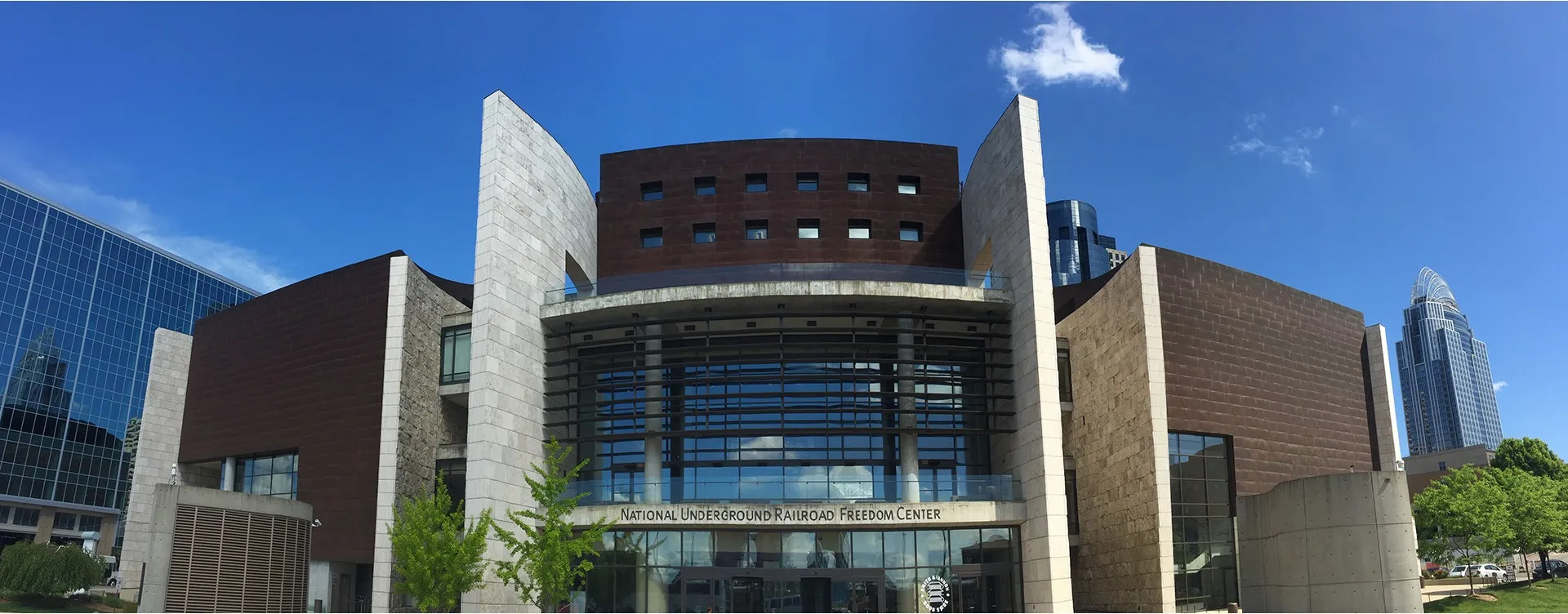
Inquiry at the National Underground Railroad Freedom Center When I taught tenth-grade American history, I had a sign on my classroom wall that read Never stop asking WHY. As an eager new teacher, I had plans to utilize inquiry in my classroom and envisioned my students, under my tutelage, asking big questions and making connections […]

In 2019, I wrote about how I began my year pre-assessing student performance on the skills central to the IDM: (1) making evidence-based arguments. As we approach the second half of the school year, I want to share new insights for preparing students to engage with inquiry. After 2019, and in response to the impact […]

“We inherit our history.” It was a phrase I often used to begin my year in the hopes of sparking student agency and making history relevant. But as an early teacher in social studies and ELA, misconceptions about the importance of authentically investigating history filled my brain. I knew I wanted my students to engage […]

The first time I encountered inquiry I was immediately hooked. As a novice teacher, I knew that I wanted my curriculum to be relevant, responsive, and sustaining, and I knew I wanted to attend to those resource pedagogies through asking questions. I knew that I needed to plan my course backwards, starting with big ideas, […]

I learned about the Inquiry Design Model and C3 Framework as a first-year teacher. At that time, I was working with MaryBeth Yerdon and she brought up the IDM, C3 Teachers, and the C3 Framework at a department meeting. MaryBeth learned about inquiry the previous year at a district-wide professional development. Her enthusiasm about inquiry […]

In classrooms, we use inquiries to deepen student understanding of content and to sharpen student skills towards making evidence-based arguments, asking important questions, and taking informed action. In the past, I’ve worked with teachers on adopting the language of inquiry, not only as they learn to create and deploy inquiries, but as general praxis. In […]

I recently zoomed with Nick Stamoulacatos, Supervisor of Social Studies at Syracuse City School District and one of the writers on the article “Countering the Past of Least Resistance” in that latest Social Education. We talked about Syracuse City Schools inquiry initiative and the inquiry loop featured in the article. Can you give me a […]

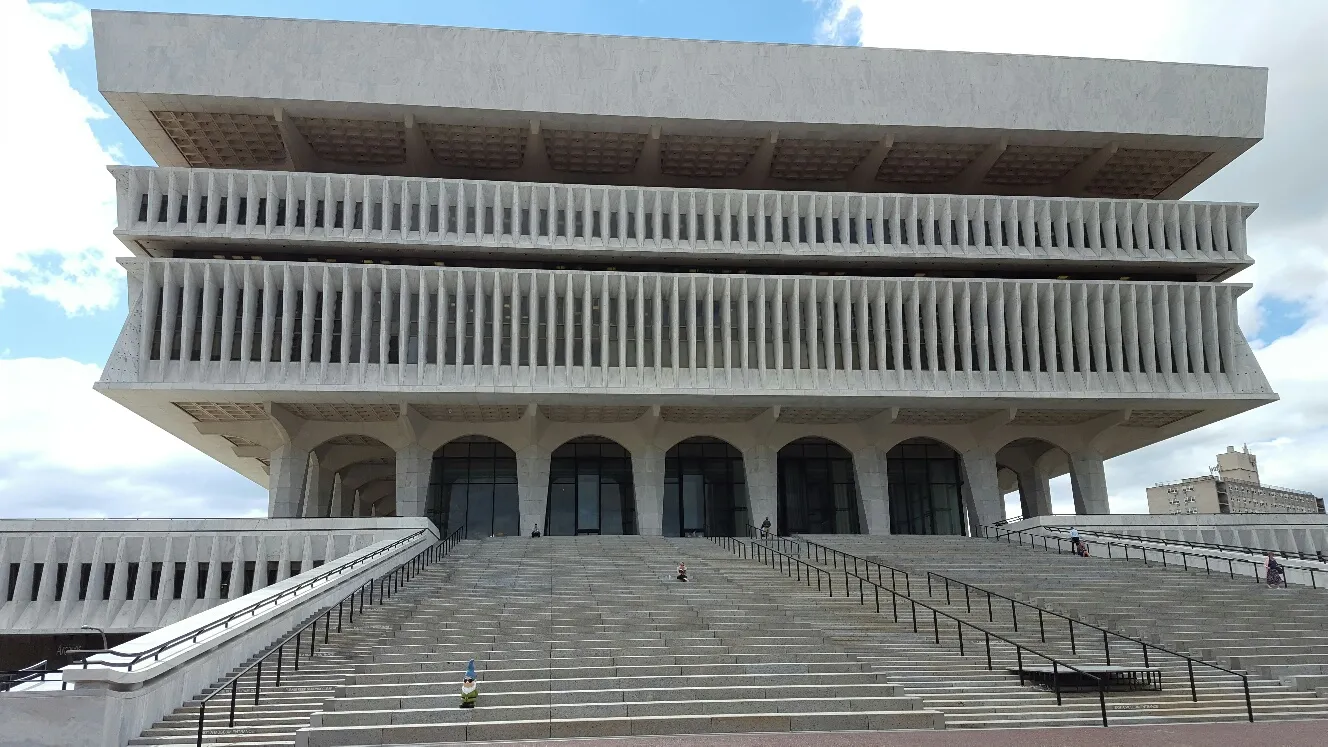
Image of New York State Archives and Museum in Albany, New York Making connections with cultural centers offers educators a measure of expertise outside their own content knowledge and pedagogical skill. Doing so also offers valuable resources that can be used to help bring history to life. These advantages suggest why connections with cultural centers […]

As I recently waited to pick up my child from school, I noticed a plaque that said the school was built in 1939 as part of the New Deal Works Progress Administration. I had walked by this sign several times and never noticed. Putting on my teacher hat, I thought about the many questions this […]

The following interview with Kathy Swan, SG Grant, and John Lee by Rozella Clyde was previously published in the 2021 November/December edition of Social Education Q. What were your original goals when you began working on the C3 Framework? A. When we first started working on the C3 Framework 10 years ago, we were responding […]

As a social studies educator I have heard all the excuses as to why social studies is not a priority within our elementary school classrooms. “There isn’t enough time.” “We need to focus on reading and math skills.” “Social Studies isn’t tested so it really doesn’t matter.” These excuses are gut wrenching and disheartening, because […]

When Inquiry Hits a Nerve I recently read Isabel Wilkerson’s bestselling book, Caste: The Origins of our Discontents. I found Wilkerson’s argument intellectually stimulating and began to think about how I could incorporate her book into social studies curriculum in central Kentucky. There are many challenges to incorporating modern scholarship into secondary social studies. Will […]

Elementary classes have a lot of curricula competing for airtime. Reading, math, writing, and many other vital and worthy topics fill the day. During a packed day, how can social studies inquiry fit into the schedule? Moreover, students get worn down and weighed down with everything they are expected to learn from the disciplines. Sometimes […]

C3: The Views that Energize….

As a C3 initiate, I’m struck at how the thinking of my fellow C3 Teachers resonates with my ways of thinking as a social studies educator.  I’ll even go so far as to say that they energize me. The very title of Traci Barger’s blog Move Over STEM – Social

Read More »

Continuity and Change: The C3 Action

My experience thus far teaching with C3 Framework has been very comfortable. I recognize a lot of what I see in the C3 and, for me, that’s a good thing.  One of the first things that struck me was the way the content in history, economics, civics, and geography is

Read More »

Failing Forward: A Tale of a Lost Lesson, but Found Citizens

I am failing forward.  I have failed. But forward. Face first. Let me explain. Back in May, at a faculty meeting, I heard a presentation from one of our assistant principals on our participation in the PARCC assessment program. We all listened carefully, making notes on our printed PowerPoint slides

Read More »

Diving into the C3, Part 3: First Trip through the Inquiry Arc

I’m now four weeks into my course, It’s Complicated, and we recently completely our first quick journey through the Inquiry Arc, based around the current conflict Afghanistan.  As this was the beginning of the class, my main goal for the unit was to familiarize students with how we would move

Read More »

Diving into the C3, Part 2: The First Major Challenge

As I mentioned in my last post, my first thoughts as I dove into planning my Global History class with the C3 was “wow, this is brilliant,” but as I spent more time thinking and planning about my teaching for the second semester, the more present thought was more often, “wow,

Read More »

Diving into the C3, Part 1: Context

After a year of lauding hosanna’s towards the C3, during the past month my relationship with the framework fundamentally changed; I started to actually put it into an action.  And while my first thought at all times was still, “wow, this is brilliant,” as I spent more time thinking and

Read More »

False dichotomies no more: It’s about content and skills!

Earlier in the year, I warned, “We cannot possibly continue to move solely in the direction of ‘college and career readiness’ in History & Social Studies education without ensuring that ‘civic’ readiness is valued equally.”  If teachers, districts, and states across the country embrace The College, Career, and Civic Life

Read More »

Move over STEM: Social Studies just got real

I teach at a public charter high school that offers students a rigorous college preparatory environment with a STEM focus.  Students who choose to attend such a school are often more at ease with the orientation of mathematics and science courses that emphasize inquiry-based learning and real-world applications than they

Read More »

What about ELL students and C3 Framework?

I have got a compelling question: What about ELL students and the C3 Framework? This is already the single most challenging aspect of my job.  I have students who do not speak or read any English, who are native English speakers, but can’t read past a 2nd grade level, and

Read More »