
Art has long been a tool for empowerment, giving voice to the marginalized and transforming public spaces into reflections of identity, resistance, and community pride. From the Harlem Renaissance to wartime propaganda and modern graffiti, art has shaped public perception and inspired change. Black artists of the Harlem Renaissance used poetry, photography, and painting to assert resilience and cultural agency, while wartime propaganda mobilized nations through persuasive imagery. Today, graffiti—once seen as vandalism—is being reimagined as a unifying force that reclaims urban spaces. Each of these movements shows that art is more than aesthetics—it empowers, tells untold stories, and reshapes the world.
Building Block Stacks 1

Art in the Harlem Renaissance
Compelling Question
What does art tell us about the Harlem Renaissance?
About the inquiry
The Great Migration reshaped Black communities as millions sought more—more economic opportunity, more cultural expression, and deeper connections to their heritage. Above all, Black Americans aimed to define themselves as both a powerful, unified community: distinctly Black and undeniably American. The art of the Harlem Renaissance became a bold declaration of this identity, radiating power, […]
Instructional Snapshot
Begin class with a brief flashback on the Great Migration, highlighting why Black communities moved—seeking greater economic opportunities, cultural e…
1 Supporting Questions
Building Block Stacks 2

Propaganda, Hope, & Fear
Compelling Question
How do propaganda posters visualize hopes and fears?
About the inquiry
Propaganda has been a powerful tool since the advent of the written word, reflecting humanity’s ongoing efforts to influence opinions and shape behavior. During World War II, propaganda reached new heights, exploiting people’s hopes, fears, and uncertainties in a world fraught with chaos and mistrust. With global conflict blurring the lines between friend and foe, […]
Instructional Snapshot
Start the class with a brief explanation of propaganda and its connection to ethos (credibility), pathos (emotion), and logos (logic), emphasizing how…
1 Supporting Questions
Building Block Stacks 3
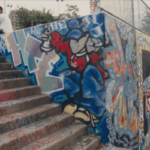
Graffiti and Community
Compelling Question
How can graffiti unite a community?
About the inquiry
Graffiti has often been seen as nothing more than vandalism, giving communities a bad reputation and reinforcing the idea that cities and urban areas are unsafe. But as more people move from big cities to smaller towns, the role of graffiti is starting to shift. Communities are now welcoming artists to create murals that celebrate […]
Instructional Snapshot
Begin class by introducing some key terms related to graffiti design that students will see in the sources. Use Source A to get them thinking about wh…