
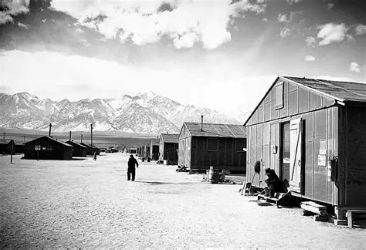
Photographs often reveal the human impact of significant historical events. When Japanese Americans were forced to live in internment camps during World War II, Ansel Adams aimed to show the resilience of Japanese Americans despite losing everything they were forced to leave behind. The resulting imagery may tell an incomplete story about their experience. By examining these photographs, students can connect empathetically with the stories of those who endured this challenging time and consider what else we need to ask to make their story more complete.
Login to add Inquiry to Stack
About the inquiry
Compelling Question
What story do photographs tell?
Standards
D2.His.6.9-12. Analyze the ways in which the perspectives of those writing history shaped the history that they produced.
Instructional Snapshot
Class begins with a gallery walk of photographs taken by Ansel Adams of the Manzanar Japanese Internment Camp. Students work in pairs to develop questions about the lives of individuals featured, capturing their questions on a graphic organizer.
Students then determine which pictures should be combined to tell a full story about life in Manzanar. They describe the story the pictures tell, and the students share their collections and interpretations with the class either by creating a digital presentation or on posters using small printouts of the photographs.
As a class, students develop follow-up questions that would fill in any gaps in understanding or detail.
Formative Tasks
COLLABORATE: Write questions about specific individuals featured in the photos.
DELIBERATE: Curate a collection of photos that tell a story about life in Manzanar.
PRODUCE: Explain the story told by the photo collection and add follow-up questions that would help make the story more complete.
Sources
Source Set: Ansel Adams's Photographs of Japanese-American Internment at Manzanar, Library of Congress
Summative Performance Task
No data found.
Taking Informed Action
No data found.