
Words in poetry can make a difference in the world because they express powerful emotions, ideas, and experiences in a way that touches people’s hearts and minds. Through this approach, students will develop critical thinking and learn how people can continue to contribute to important causes in their schools, communities, and the world.
Login to add Inquiry to Stack
About the inquiry
Compelling Question
Where do Americans make their voices heard today?
Standards
D2.Civ.10.K-2: Compare their own point of view with others to understand the importance of diverse voices.
Instructional Snapshot
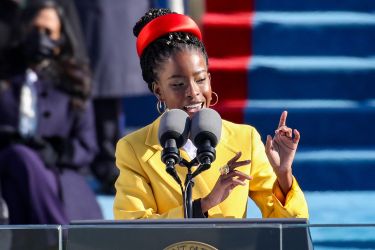
Class begins with a discussion exploring what it means to have a voice and how we express ourselves, such as through talking, singing, writing, or drawing. Students consider how their voices can inspire, help, and impact others. The teacher introduces poetry as a creative way to express thoughts and feelings, highlighting Amanda Gorman as an example of someone using her voice to address important topics. As students listen to a recording of Gorman’s poem, accompanied by a transcript, they highlight inspiring or thought-provoking words during two video sections (00:00-1:11 and 4:40-5:38). Afterwards, students discuss their annotations in pairs or as a whole class. The class then examines the metaphor of “light” in Gorman’s work, reflecting on how they can embody this through acts of kindness or bravery as the teacher displays the stanza: “For there is always light, / If only we’re brave enough to see it, / If only we’re brave enough to be it.” The class reconvenes to determine the impact and location that the timing of the speech had its meaning and on the country. Finally, students brainstorm their beliefs and ways to make a difference, then write 2-4 line personal poems based on these ideas. They share their poems in a supportive environment, celebrating each other’s creativity and voices.
Formative Tasks
COLLABORATE: Students analyze and annotate Gorman’s speech.
DELIBERATE: Determine the impact the timing of the speech had on articulating collective concerns for our country.
PRODUCE: Students will write a short poem advocating for what they believe in.
Sources
Source A: Teaching with Amanda Gorman’s “The Hill We Climb”, Library of Congress
Source B: Amanda Gorman’s Poem, “The Hill We Climb” Visual Recording, The Guardian
Summative Performance Task
No data found.
Taking Informed Action
No data found.