
Photography serves as a crucial form of historical evidence, offering visual records that provide insights into the past. Through the lens of historical photographs, we gain direct access to moments in time, witnessing pivotal events, societal changes, and the everyday lives of people. These images act as primary sources that capture the details of historical events—be it wars, social movements, or cultural practices—preserving the context and atmosphere of the era. By analyzing photographs as historical evidence, students can critically examine the realities of the past, building a deeper understanding of the complexities and nuances that shaped human experiences.
Login to add Inquiry to Stack
About the inquiry
Compelling Question
Do photographs tell the truth?
Standards
D2.His.12.6-8. Use questions generated about multiple historical sources to identify further areas of inquiry and additional sources.
Instructional Snapshot
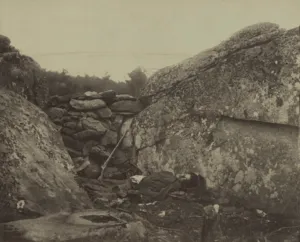
The class begins with a teacher-led observation of a Gettysburg photograph, prompting students to analyze details and use them as evidence to support a historical claim with a graphic organizer. Next, students deliberate on the photograph’s reliability after learning it was staged, discussing how manipulated elements affect its value as historical evidence. (Download the Word or PDF files for more)
Formative Tasks
COLLABORATE: Participate in a whole-class guided observation exercise to analyze the photograph of the Battle at Gettysburg.
PRODUCE: Construct evidentiary support for a provided claim about historians’ view of the Battle at Gettysburg.
DELIBERATE: Determine the impact of conflicting information regarding the creation of the photograph and what it suggests about its truthfulness.
Sources
Source: Alexander Gardner, “Home of a Rebel Sharpshooter”, 1863, Library of Congress
Summative Performance Task
Argument:
Extension:
Taking Informed Action
No data found.