
In this lesson, students learn to take informed action by preparing public comments to present to a state board of education. They begin by analyzing an example of an effective public comment to understand strategies for advocacy, then review their state’s social studies standards on the civil rights movement to identify inaccuracies, omissions, and biases shaped by the “Master Narrative.” Using this analysis, students craft concise, persuasive comments advocating for revisions to the curriculum standards.
Login to add Inquiry to Stack
About the inquiry
Compelling Question
How can better history lead to a better future?
Standards
D2.His.10.9-12. Detect possible limitations in various kinds of historical evidence and differing secondary interpretations.
Instructional Snapshot
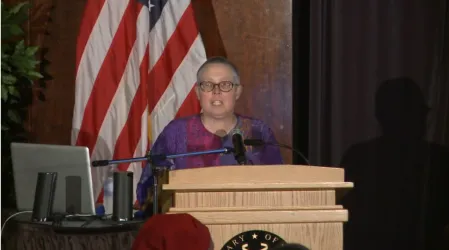
Begin by having students listen to a segment of Dr. Emilye Crosby’s speech on teaching the civil rights movement (11:10–14:45). Encourage them to reflect on how her experiences compare to their own and connect to their learning during this inquiry, particularly about common misconceptions surrounding the civil rights movement. Next, have students collaborate with a partner to analyze the effectiveness of a public comment delivered by an educator opposing inadequate social studies standards to the Virginia Board of Education. Challenge students to identify and list reasons why this comment was particularly powerful, focusing on the clarity, evidence, and persuasiveness of the argument. Conclude by challenging students to apply these techniques in preparing their own public comments. Have them review the social studies standards on the civil rights movement, identify any missing, inaccurate, or overly sanitized content, and propose revisions to address these gaps. Students should craft a concise, impactful public comment of 300 words or less, designed to fit within the three-minute time limit for presentation to the State Board of Education.
Formative Tasks
DELIBERATE: Listen to a segment of a speech about teaching the civil rights movement. Reflect on and discuss how her experiences compare to your own and connect to what you’ve learned in this inquiry about “better history.”
COLLABORATE: Work with a partner to complete an evaluation of the effectiveness of a public commenter addressing the Virginia Board of Education regarding the state’s social studies standards.
PRODUCE: Review your state standards on the civil rights movement, and identify any missing, inaccurate, or sanitized content. Develop a proposed revision to address these gaps and enhance the standards' accuracy and inclusivity. Craft a brief public comment of 300 words or less to present to the State Board of Education.
Sources
Source A: Teaching the Civil Rights Movement from the Bottom-Up 50 Years After the Voting Rights Act (11:10-14:45), Library of Congress
Source B: Sam Futrell’s Public Comment at the Virginia Board of Education (2:53:20-2:56:16), Virginia Board of Education
Source C: Your State Social Studies Standards
Summative Performance Task
No data found.
Taking Informed Action
No data found.