
Even with all the pop culture excess of the 1980s, musicians found ways to use their influence to help others. The famine in Africa during the mid-80s is a perfect example of how artists turned their popularity into a force for good. British and American musicians came together to record songs, create music videos, and organize massive live concerts—all to raise money for famine relief. These events weren’t just about the music; they included concert merch and gear, with all proceeds going to those in need. In the process, music stars became activists, showing how their voices could make a real difference beyond the stage.
Login to add Inquiry to Stack
About the inquiry
Compelling Question
How does activism define an era?
Standards
D2.Civ.5.9-12. Evaluate citizens’ and institutions’ effectiveness in addressing social and political problems at the local, state, tribal, national, and/or international level.
Instructional Snapshot
Start the class with a quick review of the major issues facing Africa in the 1980s, including the AIDS crisis, widespread famine, and civil unrest following decolonization (assuming students have prior background knowledge) (5 minutes). Then, ask students how they think Americans might have been able to help with these crises. Explain that this was the same question people were asking in the 80s. Next, have students pair up to analyze two songs. One partner will watch Source A and the other will watch Source B (earbuds or headphones will be needed). Explain that Source A features British artists and Source B features American artists. After listening, students will compare the messages, lyrics, and musical styles of both songs, looking for common themes. Using a Double-Bubble Map, they’ll organize the similarities and differences in how each song addresses the compelling question (15 minutes). Then, provide Source C and have students read through the article, using comprehension questions or prompts that connect back to the compelling question. Make sure students understand the context and significance of Live Aid. Afterward, introduce Source D and conduct a think-aloud to model how Congress responded to Live Aid. Wrap up this section with a class “thrash out” debate on whether Live Aid was an effective tool for activism (15 minutes). Finally, students will create a plan or campaign that uses cultural elements like music, fashion, or food to address a current societal issue, either locally or globally (10 minutes). You can offer students flexibility in how they design their projects, and encourage them to work in pairs or teams with clearly defined roles. Optional: Students can present their campaigns to local community leaders and collaborate on implementing their ideas.
Formative Tasks
COLLABORATE: Students will select either Source A or Source B. After listening to each, they will compare music, lyrics and message of both with a partner.
DELIBERATE: After reading Sources C and D, have a “thrash out” about whether Live Aid was an effective tool for activism.
PRODUCE I TIA: Students will create a plan for a campaign using cultural elements (like music, fashion, food, etc.) to address a current societal issue either locally or globally.
Sources
Source A: Do They know It’s Christmas Time?
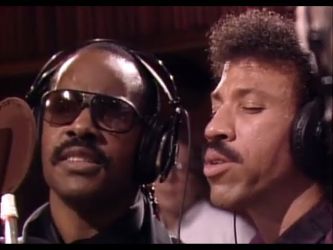
Source B: We are the World Music
Source C: This Day in History: Live Aid concert raises more than $100 million for famine relief in Africa
Source D: Live Aid Day, Library of Congress
Summative Performance Task
No data found.
Taking Informed Action
No data found.