
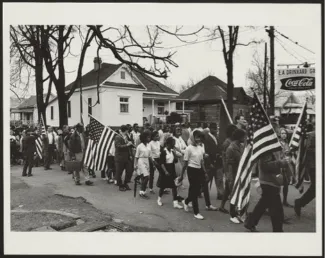
This inquiry explores how photographs of the Selma to Montgomery march served as a call to action during the Civil Rights Movement. By analyzing historical images and primary sources, students will examine the courage and resilience of the marchers, the impact of these visuals on public opinion, and the passage of the Voting Rights Act of 1965. Through this investigation, students will answer the compelling question: How can photographs be a call to action?
Login to add Inquiry to Stack
About the inquiry
Compelling Question
How can photographs be a call to action?
Standards
D2.His.9.9-12. Analyze the relationship between historical sources and the secondary interpretations made from
them.
Instructional Snapshot
The class begins with students analyzing photos from the Selma to Montgomery march using the See it, Feel it, Name it! strategy, first noting observations and emotions individually, then discussing with partners and peers. Groups compare perspectives across images to explore themes of courage, resilience, and purpose, and conclude with reflections connecting their insights to the compelling question. (For more download the Word or PDF version)
Formative Tasks
COLLABORATE: Students share and compare their analyses with peers, deepening their understanding through discussion and exchanging insights.
DELIBERATE: Groups with all images represented discuss broader questions, synthesizing their analyses to evaluate the marchers' courage, resilience, and the photographs' historical significance.
PRODUCE: Students independently analyze the images, recording observations and feelings to construct meaning from the visuals.
Sources
Source Set: Photography collection from the march from Selma to Montgomery
Summative Performance Task
No data found.
Taking Informed Action
No data found.