
Following the chaos of World War I and the Spanish Flu, the 1920s was a period dominated by social change. Nicknamed “The Roaring ’20s,” the decade saw people redefining American culture in positive and negative ways. In this inquiry, students examine cultural movements and events of the 1920s to determine what made them roar.
Login to add Inquiry to Stack
About the inquiry
Compelling Question
What made the 1920s roar?
Standards
D2.His.1.9-12. Evaluate how historical events and developments were shaped by unique circumstances of time and place as well as broader historical contexts.
D2.His.2.9-12. Analyze change and continuity in historical eras.
Instructional Snapshot
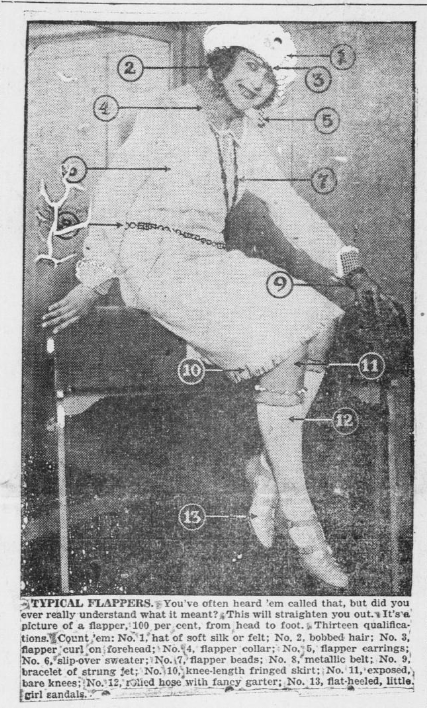
Class begins by introducing students to a series of source sets on culture in the 1920s: Flappers, Prohibition, the Scopes Monkey Trial, and the Rise of the Ku Klux Klan (KKK). First, students work in pairs to analyze two of the source sets to create a list of changes during the 1920s using an organizer.
Students then join with another pair who looked at the other two source sets and sort the changes into positive and negative changes using a T-chart.
Finally, students use their T-charts to create a newspaper headline and short column, similar to those in the source set, that answers the compelling question. The columns should be four to six sentences in length, using evidence from the sources to support their arguments.
Formative Tasks
COLLABORATE: Make a list of changes during the 1920s.
DELIBERATE: Sort changes into positive and negative changes.
PRODUCE: Create a newspaper headline and column that answers the compelling question, supported with examples from the sources.
Sources
Sources A-C: Flappers Source Set, Library of Congress
Sources D-F: Prohibition Source Set, Library of Congress
Sources G-I: Scopes Trial Source Set, Library of Congress, Historical Thinking Matters
Sources J-L: Rise of the Ku Klux Klan Source Set, Library of Congress
Summative Performance Task
No data found.
Taking Informed Action
No data found.