
Inquiry For All
Search C3 Teachers Inquiries
Search Tool
The Heart of Social Studies
Inquiries

This inquiry leads students through an investigation of the various roles of professionals who work in the community. While the focus of this inquiry is limited primarily to first responders, teachers could expand the discussion to include other community helpers or “school helpers” such as the custodial staff, cafeteria staff, librarians, etc. By focusing on…

This inquiry leads 2nd and 3rd grade students through an investigation of their community and the impact of their actions on their community. The compelling question, “How do my actions matter to my community?” gives students the opportunity to think deeper about the roles and responsibilities of every member in the community, from everyday people…

Filed Under:
This inquiry is an exploration into the concepts of time, continuity, and change in a community with the dual purpose of establishing students’ understandings of the passage of time and explaining why the past matters today. The inquiry taps into a common student assumption about the authority of the present and its existence independent of…

Filed Under:
This inquiry provides students with an opportunity to evaluate a series of innovations by three complex civilizations— Maya, Aztec, and Inca. In examining the compelling question “What makes a complex society complex?” students explore how complex societies and civilizations adapt to and modify their environment to meet the needs of their people. Students use the…

Filed Under:
This inquiry leads students through an investigation of the ways in which artists are trying to heal the political polarization that have divided Americans. Students analyze recent events (e.g., the 2024 Fast Car duet between Tracy Chapman and Luke Combs) and how these artists created some national unity in their work. Students start to think…

Filed Under:
This inquiry leads students through an investigation of the conflict between the nation of Israel and the Palestinians. By investigating the compelling question “Why is conflict so difficult to resolve?” students evaluate the levels of cooperation between these two groups, analyze their land claims from multiple perspectives, and consider the human characteristics that influence the…
Filed Under:
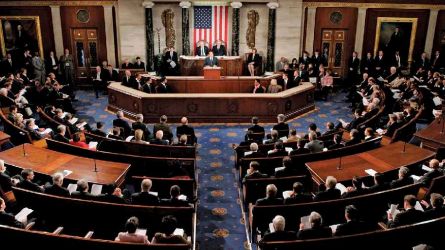
One of the core tenants of a democracy is that the government is run by the people. A representative government is paramount in ensuring that government continues to represent an increasingly diverse population in the United States. In this inquiry students will investigate the compelling question, “How representative are our representatives?”
…
Filed Under:
The goal of this inquiry is for students to gain an informed, critical perspective on the United States Constitution as it stood at the conclusion of the Constitutional Convention of 1787. By investigating the justness of the Constitution, students examine how the Constitution structures the government, the Constitution’s relationship to slavery, and the extent to…

Filed Under:
This inquiry leads students through an investigation of Containment. By investigating the compelling question “Was Containment a Success?” students evaluate the need for and policies of containment. The formative performance tasks build on knowledge and skills through the course of the inquiry and help students make judgments on the policies of containment. Students create an…

There has been much debate about the role of corporations and how they function in today’s global society. Arguments abound as to whether or not these entities pay their fair share of taxes to the governments of the countries in which they operate and whether or not they have a social responsibility to act according…
Filed Under:
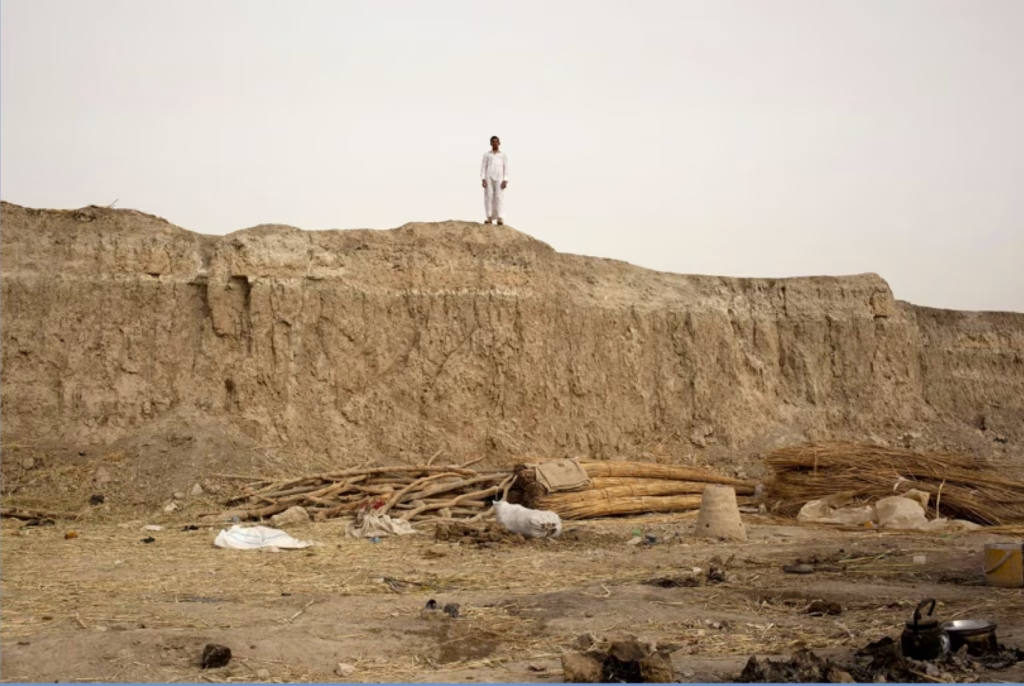
This 2016 Inquiry Challenge winner inquiry leads students through an investigation of water access in the Middle East using various sources that consider geographical, political and economic issues. By investigating the compelling question, students examine the geography of the region, including environmental and demographic relationships, the ecological impact of accessing water, and the subsequent political…

This inquiry leads students through an investigation of the concept of “courage” in general, and the actions of those who responded to the 9/11 attacks, more specifically. Those attacks, over 10 years ago, have now passed from current event to history. By focusing on a relatively recent event, students should see that history is not…

Filed Under:
This inquiry leads students through an investigation of the early Cold War. In addressing the compelling question “Is military strength a prerequisite for peace?” students will review primary sources from President Reagan, President Eisenhower, the CIA, the White House, and data on the growth of the American military. Students will add evidence, questions, connections, and…
Filed Under:
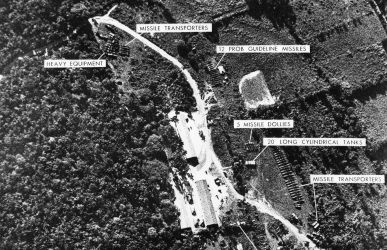
In October 1962, the U.S. discovered that the Soviet Union was constructing secret nuclear missile sites in Cuba, sparking a 13-day confrontation that brought the superpowers to the brink of nuclear war. President John F. Kennedy responded by establishing a naval “quarantine” around the island and demanding the immediate removal of all offensive weapons. Soviet…

This inquiry engages third graders in expanding their understandings of diverse cultures. The compelling question “How does our culture make us similar and different?” is intellectually respectful of students who, by their nature, are interested in people and their similarities and differences. It allows for engagement with several social studies disciplines as students examine diverse…

Filed Under:
This third-grade inquiry expands students’ understandings of how groups represent themselves through what they wear. The compelling question—“What do things I wear say about me?”—engages students in an examination of material culture by considering the factors impacting their own choices of what they wear such as geography, culture, and religion. Students will examine the similarities…

This Kindergarten/1st grade inquiry expands students’ understandings of how groups represent themselves through what they wear. The compelling question—“What do things I wear say about me?”—engages students in an examination of material culture by considering the factors impacting their own choices of what they wear such as geography, culture, and religion. Students will examine the…

Filed Under:
This fifth-grade annotated inquiry asks why countries declare their independence. As an integral early step in the process of becoming independent, a declaration of independence functions as an argument for why people should be free. This inquiry focuses on the argument made in the United States Declaration of Independence. With a firm understanding of the…

Filed Under:
This inquiry focuses on the concept of equality as defined by the Declaration of Independence and the rights enumerated within. The questions, tasks, and sources in this inquiry asks students to examine the evolution of our notion of “all men are created equal” and how we have lived up to (or not lived up to)…

This inquiry leads students through an investigation of historical and contemporary US immigration policy and how the policies stack up against the idea that United States is a “nation of immigrants.”. It is part of a series of lessons commissioned by the Democracy Project at the University of Virginia centered around the podcast Democracy in…

This inquiry leads students through an investigation of historical and contemporary social, political, and economic issues posed by mass incarceration. It is part of a series of lessons commissioned by the Democracy Project at the University of Virginia centered around the podcast Democracy in Danger. Democracy in Danger lessons share some basic characteristics. The compelling…

This inquiry leads students through an investigation of the challenges posed by hate groups to young people as a lens for understanding the problems posed by xenophobia more broadly. It is part of a series of lessons commissioned by the Democracy Project at the University of Virginia centered around the podcast Democracy in Danger. Democracy…